Factory Quality Control
From Cut-Off to Bundle: Light Steel Keel Length Checks
A practical factory check for keeping finished stud and track lengths tied to the right profile, bundle and order record.
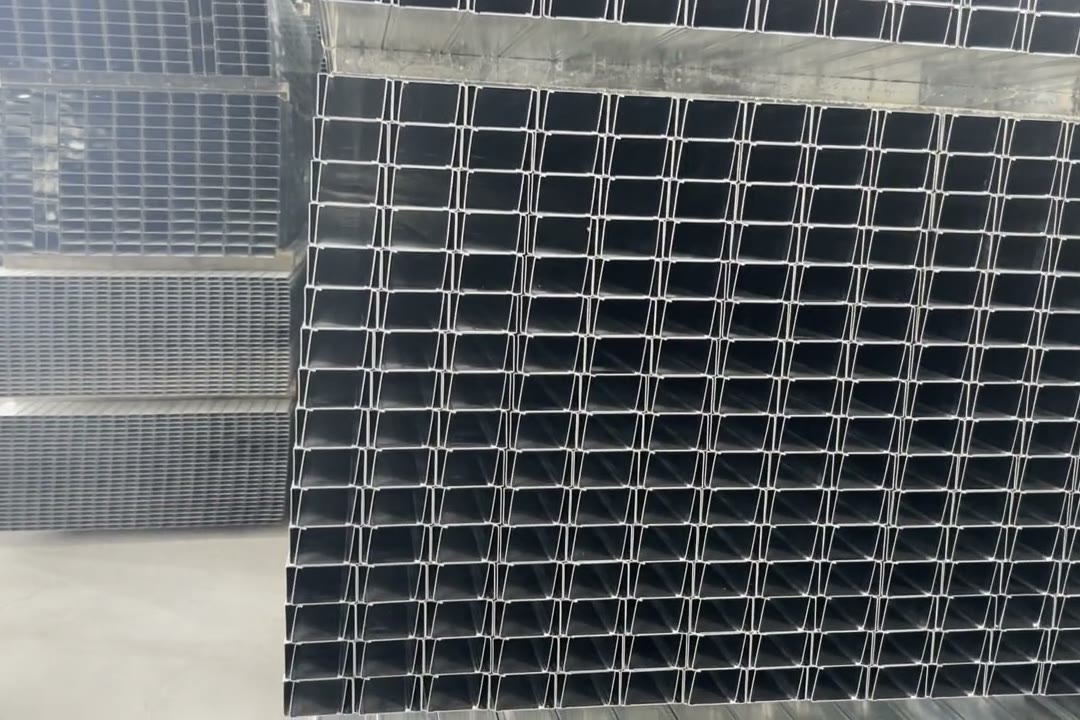
A flush bundle end is evidence, not a measurement
Stand at the end of a stacked framing bundle and the cut faces form a strong visual pattern. One profile projecting beyond that plane is easy to see; a shorter piece may leave a dark recess among otherwise even ends. Light steel keel length checks use that view as an early warning, but not as the final answer. A neat bundle face can still contain the wrong nominal length, while a slightly uneven face may reflect how loose profiles settled during handling. The practical question is whether the finished studs or tracks match the released order description. If a wrong length reaches site, the problem does not stay inside the bundle. Installers may cut every piece again, mix offcuts into another wall zone, or discover that a planned full-height stud no longer suits the partition. Checking before straps and labels close the bundle keeps that decision in the factory, where profile identity and production records are still available.
Freeze the length basis before the cut-off starts
A useful check begins with a controlled order line, not a tape laid against an anonymous profile. The record should identify the section, web and flange dimensions, steel thickness, finished length, punching requirement, quantity and packing group. Chengyu's live product information lists drywall studs and tracks within a catalog length range of 2000 to 6000 mm and also asks OEM buyers to confirm profile drawings, length, punching, labels and packing during technical review. The agreed order, rather than the catalog range alone, is the inspection basis. Separate similar-looking items before production or packing creates ambiguity. A stud and its matching track may share a wall reference but have different sections. Ceiling channels can resemble partition profiles when viewed from the side. Special lengths for openings or local details should carry their own release identity instead of being placed beside standard stock with a handwritten assumption. When the length basis changes, update the order record and the bundle plan together; otherwise the factory may measure the revised piece correctly and still label it with the earlier instruction.
Measure a representative profile on a supported surface
Take the sample from the identified group and support it so the long profile is not bowing between two points. Establish consistent end contact points, keep the tape or measuring device along the length, and read the finished cut rather than an outer wrap or displaced neighbor. Long, light-gauge sections can move when handled, so a measurement taken across a sagging or twisted piece is harder to repeat. The acceptance tolerance must come from the approved order, drawing or applicable project requirement; it should not be invented at the packing bench. Record enough context for a second person to repeat the check: profile name, bundle or production reference, specified length, observed result and disposition. If the first piece raises doubt, pause the release and widen the sample according to the factory's inspection plan. Do not trim an isolated profile and return it to the stack without investigating the rest of the group. A single short or long member may be a handling mix-up, but it may also point to a cut-off setting, a changeover or a bundle separation problem.
Use the bundle face to find the stray profile
After the representative measurement, return to the end view. Light steel keel length checks become faster when the inspector uses the aligned faces to scan for an outlier across the bundle width and height. Look from more than one position because a strap, protective sheet or neighboring stack can hide a recessed end. The view also reveals whether different profile sections have been placed together, which can matter just as much as length when studs, tracks and channels are being released for separate work areas. End alignment is a screening method, not a substitute for direct measurement. Strapping can pull loose profiles into a convincing plane, and a bundle resting against an uneven stop can produce the opposite impression. When one end is inaccessible, the inspector should not infer conformity from the visible end alone. Open the group or move it safely enough to identify and measure the suspect piece under the established procedure. The aim is to remove doubt before packing makes the evidence harder to reach.
Keep standard and special lengths in distinct release groups
Length control can fail after measurement if several approved groups merge in the warehouse. Keep studs with the matching tracks for the intended wall package, but preserve a visible boundary between different finished lengths. Punched and unpunched versions also need clear separation. A long project bundle may look uniform from the side even when the installation sequence calls for standard wall studs, shorter opening pieces and ceiling channels to leave storage at different times. Packing should follow that release logic. Support long profiles along the bundle, protect the open ends from handling damage, and avoid placing a small special-length group where it will disappear beneath standard stock. For export or distributor orders, think about the first unload as well as the factory stack. The receiver should be able to identify which length belongs to which profile family without cutting every strap or comparing loose pieces on the floor. That reduces resorting without making a claim about the installation itself.
Let the label close the inspection
A release label should carry the same identity used for the check: product or profile code, finished length, quantity or bundle reference, order group and any approved private-label wording. The exact fields depend on the buyer's order, but the principle is simple. A correct measurement with a vague label only moves the uncertainty downstream. Place the label where it can be read during warehouse picking and receiving, while keeping it protected well enough to survive the planned handling route. For distributors and project buyers, the strongest inquiry is the one a factory can inspect without interpretation. Send the profile drawing or confirmed dimensions, state the finished length and how it is defined, separate standard and special groups, and describe the label and packing requirement. Chengyu already invites review of custom section, thickness, length, punching, labels and export packing. Tying those fields to one bundle-release record turns length from a loose number into a traceable part of the framing order.