Ceiling Repair
Water-Stained Ceiling Tiles: Replacement After Leak Repairs
How to separate moisture investigation, repair release and replacement ordering when a commercial ceiling develops a water stain.
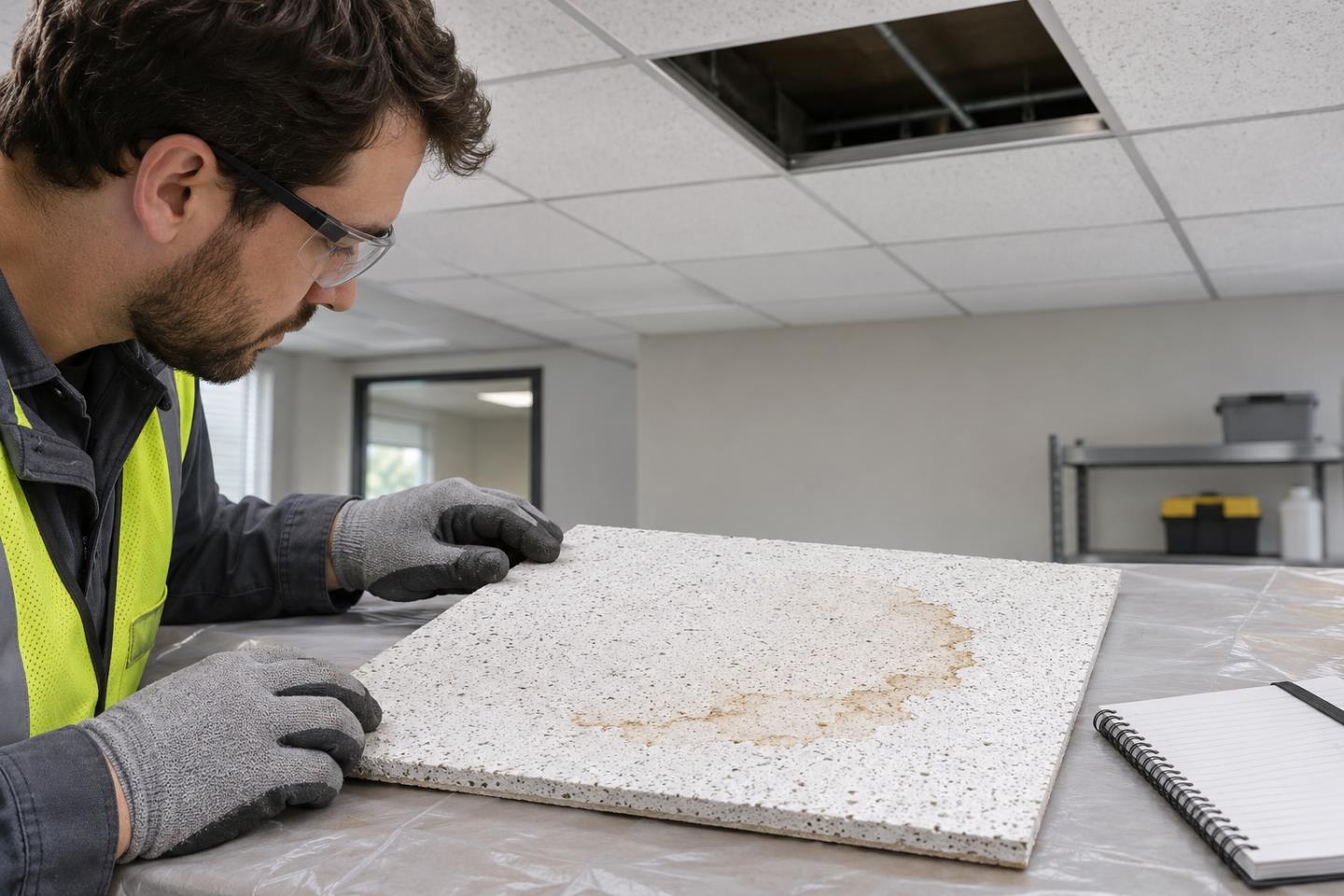
The stain is a location, not a diagnosis
A brown ring above an otherwise tidy office can turn a small maintenance request into a repeat callout. Someone wants the marked panel changed before the room reopens; someone else still needs to find out why it became wet. Water-stained ceiling tiles deserve a repair decision before they become a replacement order. The visible face identifies where the symptom appeared. It does not establish that the ceiling void is ready to close. For contractors and distributors, the useful distinction is between supplying a matching panel and releasing the ceiling for reinstatement. Those decisions belong to different people. A supplier can help identify the board and grid combination. The building team must resolve the moisture issue and confirm when the affected area can receive replacement material. Keeping those responsibilities clear prevents a fresh tile from becoming a convenient way to hide unfinished work.
Give the repair team an identifiable bay
Record the room and the affected ceiling bay before panels are disturbed, where site conditions allow. A wide photograph taken from a recognisable doorway is usually more useful for locating the problem than a close photograph of a stain alone. Add the nearby light, diffuser or wall junction as a reference. Mark the affected position on a simple room sketch if several similar offices share the same ceiling. Pass that record to the person responsible for investigating the moisture. Do not name a roof, pipe or air-conditioning fault from the shape of the ring. The maintenance enquiry needs evidence from the building and its services. Where water is active or the condition of the ceiling is uncertain, the responsible team should control access and arrange appropriate inspection before ordinary tile replacement work begins.
Wait for a repair release, not a cleaner-looking face
Kanopi by Armstrong advises confirming that the source of a water leak has been fixed before replacing ceiling materials. That principle is useful when scheduling a commercial ceiling repair: establish who owns the source repair, who checks the affected area and who authorises reinstatement. A delivery date for new tiles is not evidence that those steps have happened. A dry-looking underside alone should not become the release criterion. Ask the responsible building team what inspection or follow-up is required for the actual incident. Record the decision in the work order so the ceiling installer receives a definite instruction. If the source remains unresolved, keep replacement stock protected and the repair request open rather than repeatedly changing the visible panel.
Separate cleaning advice from replacement advice
Armstrong's commercial ceiling performance FAQ advises considering replacement where ceiling products are damaged, water stained or discoloured. Its cleaning guidance also states that mineral fiber and fiberglass panels should never be soaked. These are manufacturer-specific references, not a cleaning approval for every board on the market. Obtain the instructions for the selected product before applying liquid or attempting a surface treatment. For water-stained ceiling tiles, do not assume that scrubbing, bleaching or painting is an accepted repair simply because the mark becomes less visible. A surface treatment does not answer the moisture question, and its suitability depends on the board and finish. Where the existing product cannot be identified, ask for product-specific guidance rather than transferring a cleaning method from a different ceiling range.
Order the affected area as a defined repair
Once replacement is authorised, identify the existing tile module, edge and visible finish. Chengyu lists mineral fiber board options including 595 x 595, 600 x 600, 603 x 603 and 600 x 1200 mm, with square, tegular and revealed edge choices. Those catalogue options are a starting point for an enquiry. They do not establish that a particular board fits the installed ceiling. Give the supplier an identified sample or clear photographs and dimensions, together with the exposed-grid reference where available. State whether the enquiry covers a few affected bays or a larger agreed replacement zone. Keep that scope separate from any decision to renew the grid. If the inspection identifies damaged suspension components, the project team should resolve the appropriate repair detail before tiles are fitted. For a distributor, the order note should distinguish the requested replacement from a claim that the original ceiling has been restored to a specified performance. A matching appearance is only one part of that decision. Avoid promising moisture resistance, acoustic results or suitability for an unusually damp room without the documentation for the exact selected product and application.
Close the incident with evidence the next team can use
Before reinstatement, confirm that the repair release still applies and that the installer has the agreed replacement material. Keep new tiles flat, dry and protected until the area is ready. Fit them using the applicable product and project instructions, then check the finished bay and the surrounding exposed grid from normal room viewing positions. Finish the work record with the affected location, the source-repair reference, the reinstatement date and the replacement product identity. Retain useful carton information with the maintenance file. If a stain returns, that record lets the building team reopen the incident against a known repair rather than starting with another anonymous photograph. The practical objective is a ceiling returned to service after the underlying issue has been addressed, with enough information left behind to recognise a recurrence.