Maintenance
Suspended Ceiling Maintenance Checks After Handover
How distributors and contractors plan tile access, spare stock and grid care after a ceiling is handed over.
Handover is not the end of the ceiling job
Suspended ceiling maintenance starts the first time somebody lifts a tile after the project team has left. A corridor looks finished, the office lights are on, and the mineral fiber panels sit neatly in the exposed grid. Then a maintenance worker needs to check a cable tray, adjust a device or inspect a service point above the ceiling. That simple visit tests decisions made months earlier: module choice, edge detail, grid face width, spare tile storage, labels and the way the ceiling was explained to the people who now own it. For overseas distributors, contractors and project buyers, this is where a ceiling package proves whether it was bought only as a finish or as a working interior system. Chengyu's live product content presents painted T-grid systems with main tee, cross tee and wall angle, 24 mm and 15 mm face-width options, and common layouts such as 600x600 and 600x1200. The mineral fiber board range includes common metric modules and square, tegular and revealed edge options. Those choices do more than shape the look of the room. They shape how the ceiling will be opened, closed and repaired through daily building use.
Access should be predictable, not improvised
A well-installed exposed grid ceiling gives the maintenance team a practical advantage: a tile can be lifted without cutting the finished surface. That advantage is wasted when access is treated as a random future problem. On real sites, the same few areas are often opened again and again. Corridors, service rooms, office support zones and back-of-house spaces may see more ceiling traffic than reception areas or meeting rooms. If the buyer knows this pattern early, the ceiling order can be discussed with maintenance in mind instead of only with appearance in mind. The useful question is simple: where will people put their hands after handover? When that answer is known, contractors can keep service-heavy zones clear during installation, avoid burying special tiles or trims in a mixed release, and hand over a ceiling that the facilities team can understand. This does not replace project drawings or local installation rules. It gives the purchasing and site teams a practical checklist before the ceiling becomes someone else's maintenance surface.
The T-grid edge is a working edge
Painted ceiling T-grid is often judged by line, color and straightness because those are the visible details at completion. During maintenance, the same grid becomes a working edge. Tiles are lifted, tilted, rested and returned. If workers drag a panel across the face, twist a cross tee while reaching into the void, or force a tile past a tight service opening, the damage may be small at first but visible later. A clean grid line depends on careful handling as much as accurate installation. Chengyu's product range includes 24 mm and 15 mm face-width T-grid options. Buyers usually choose between them for market preference and ceiling appearance, but maintenance handling should be part of the discussion. A narrow face can give a different visual line, while a wider face gives a different bearing impression to the person replacing a tile. Neither choice is automatically better for every building. The practical point is to match the exposed grid decision with the tile edge, room use and expected service traffic.
Spare tiles need the same identity as installed tiles
Many ceiling problems after handover come from poor spare stock control rather than from the original installation. A tile is stained, chipped or removed during service work, and the site team reaches for whatever spare carton is nearest. If the module, edge or visible pattern is wrong, the replacement may fit badly or stand out immediately. If the carton label has been lost, the team may open several packs before finding the correct piece. This is where distributors can add value without making the order complicated. Keep spare mineral fiber ceiling tiles linked to the room families that will use them. Record the module, edge type and matching grid face width. Store cartons with readable labels and avoid mixing 595x595, 600x600, 603x603 and 600x1200 stock in a way that forces guesswork later. Chengyu's website already asks buyers to confirm size, edge, packing and the matching T-grid before ordering. The same information should stay visible after the material enters the building.
Clean storage is part of maintenance planning
Replacement tiles are only useful if they remain installable. On busy projects, spare cartons are sometimes pushed into a plant room, leaned against a wall or used as temporary protection for other materials. That may look harmless until the first replacement is needed. Bent corners, dusty faces and opened cartons turn a simple repair into a visible patch. Mineral fiber board is a finished ceiling product; it should be stored like one, even when it is kept for later maintenance rather than immediate installation. Good storage is usually plain work. Keep cartons flat, dry, covered and easy to read. Separate opened packs from unopened stock. Keep the spare pieces close enough to the building team that they can be found, but not so exposed that every trade walks around them. For contractors handing over a project, a small spare-tile location plan can prevent months of irritation. For distributors, clear packing and label language help the buyer keep replacement stock useful after the container has long been unloaded.
Maintenance records should feed the next order
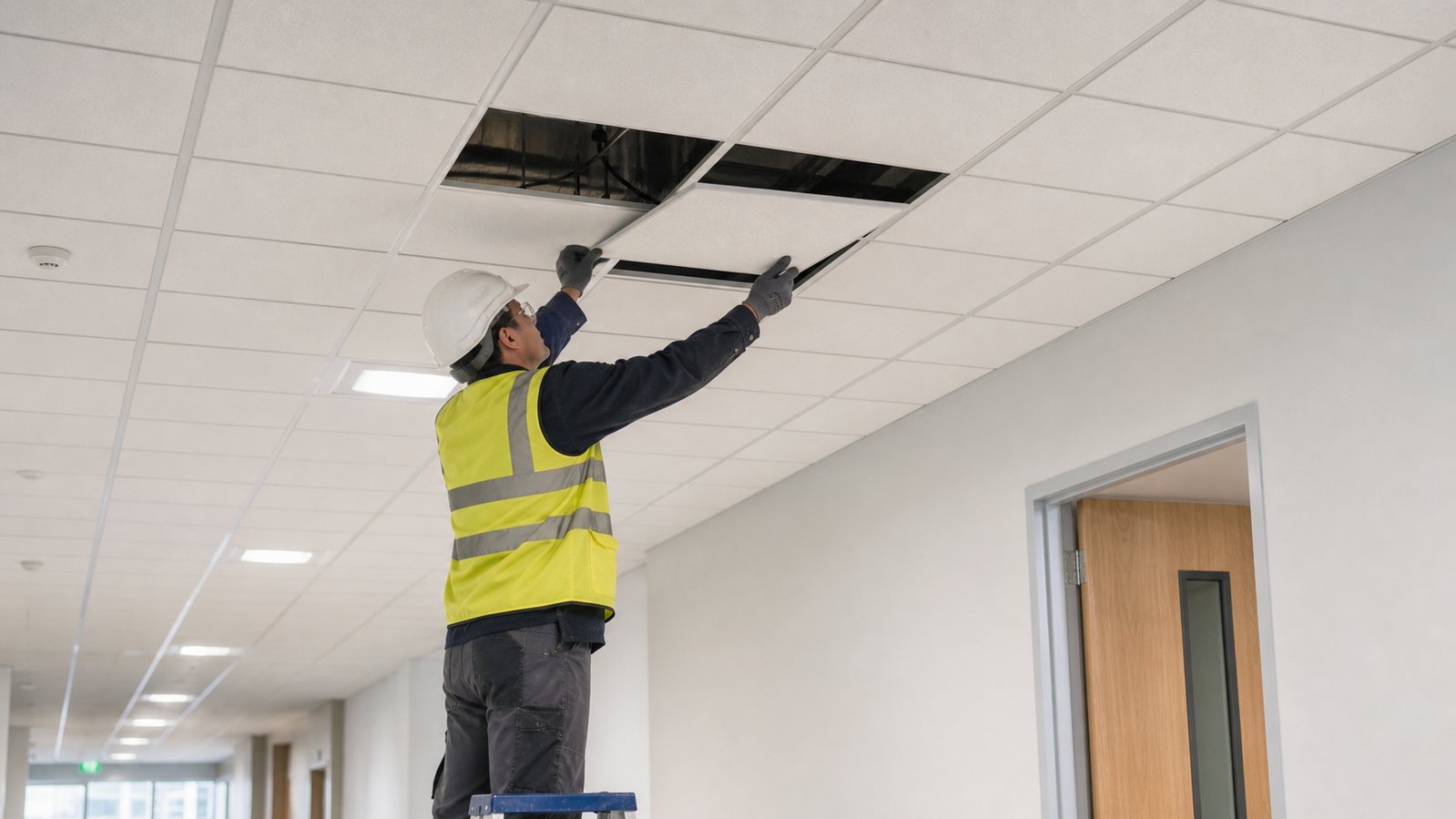
Suspended ceiling maintenance also creates useful buying information. After several months of building use, the owner may know which corridors are opened most often, which room types consume spare tiles, and whether a certain service zone needs clearer access planning on the next phase. Contractors should not treat that information as a complaint file only. It is a purchasing record for the next ceiling package. For repeat distributors, this feedback is especially practical. If a market commonly uses 600x600 tile with a certain exposed grid face, stock planning can reflect that. If project buyers regularly combine mineral fiber board with painted T-grid and accessories, the spare stock and label plan can be included in the next quotation conversation. If maintenance teams report that access points are concentrated in a few room families, those rooms can be separated in future release planning. The article image shows the ordinary moment behind all of this: one worker, one lifted tile, and a grid that needs to close cleanly after the inspection.
A maintainable ceiling protects the finished room
The best ceiling maintenance plan is not dramatic. It is a set of small decisions that keep the finished room looking settled after people start working above it. Choose the tile module and exposed grid with service access in mind. Keep spare tiles identifiable. Protect the painted grid from rough handling. Store replacement cartons as finished material. Feed maintenance observations back into the next order. That approach suits the way suspended ceilings are actually used in offices, schools, hospitals, retail areas and public buildings. The ceiling is a finish, an acoustic surface and an access layer at the same time. When buyers discuss maintenance before handover, Chengyu's T-grid, mineral fiber board and accessory package can be specified with cleaner labels, clearer spare stock and fewer surprises for the people who will lift the next tile.