Manufacturing
Painted Ceiling T Grid Roll Forming Checks Before Packing
Factory-side checks for formed T-grid profiles, connector ends, finish, labels and packing before distributor release.
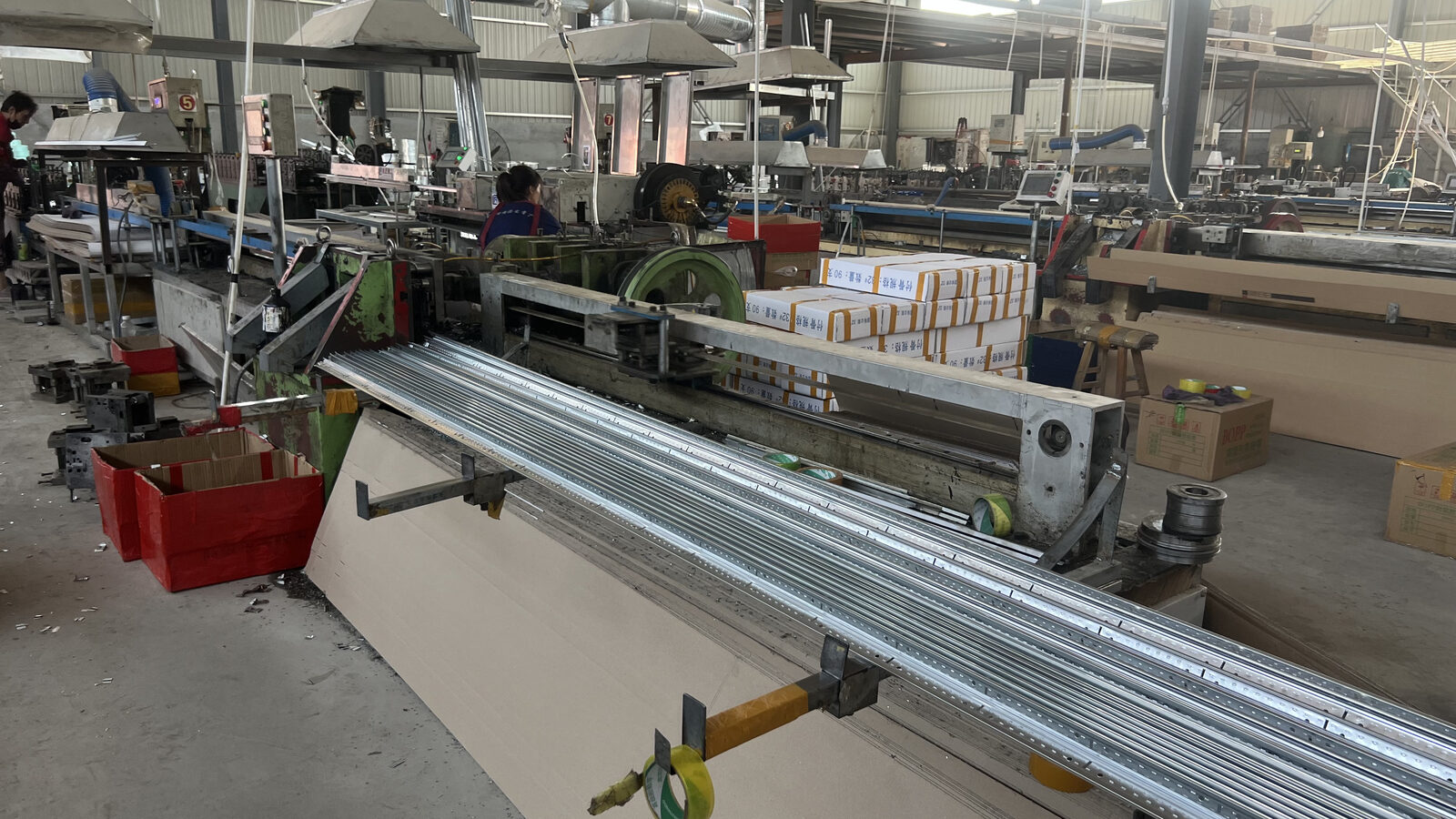
The line check starts before cartons
Painted ceiling T grid roll forming is usually judged by a simple question after delivery: do the main tees, cross tees and wall angles install cleanly with the selected mineral fiber ceiling tile? The answer is shaped earlier, while profiles are still moving through the forming line and before cartons hide the details. For overseas distributors and contractors, that factory-side moment is worth understanding because it affects installation rhythm, stock control and repeat order confidence. Chengyu presents painted ceiling T grid as the exposed suspension framework for modular mineral fiber ceiling tiles. The system is not one loose profile. It is a coordinated package of main tee, cross tee, wall angle, hangers and matched ceiling board. When a buyer reviews a shipment, the practical concern is not only whether the product name is correct. The useful question is whether the formed profiles, connector ends, exposed face and packing labels all point to the same ceiling layout.
Confirm the profile family before production
A T-grid order should begin with the profile family and the room module, not with a vague request for ceiling grid. Chengyu lists common layouts such as 600 x 600 mm, 600 x 1200 mm, 2 x 2 ft and 2 x 4 ft, and supplies 15 mm and 24 mm face-width options. Those facts sound familiar, but they control several production and packing decisions. Main tee length, cross tee length, face width, finish color and carton grouping all need to match the market where the ceiling will be installed. This is where distributors can reduce confusion before the order reaches the line. A short specification record should name the module, the required main tee and cross tee lengths, the wall angle requirement, the exposed face width and the finish. If the buyer carries both 15 mm and 24 mm grid in stock, the order language should make the difference impossible to miss. A narrow-face grid and a wider-face grid may both look like white painted metal from a distance, but they do not read the same in a finished ceiling.
Read the forming run as a system
On a production line, the installer is not present to say that a profile feels wrong. The check has to come from the people releasing the run. Straightness, profile shape, hole or slot position where relevant, and clean cut length are all easier to review before the material is bundled. The aim is not to turn every buyer into a machine technician. It is to connect the factory check to the way the grid will be handled later by a warehouse crew and a ceiling installer. A main tee that leaves the line with a steady shape supports a clearer layout on site. A cross tee with a clean end can be checked faster when the installer starts closing modules. Wall angle should be packed as a perimeter component, not treated as leftover trim. Painted ceiling T grid roll forming works best as a system review because one profile rarely fails alone in the field. Most site delays come from small mismatches: the wrong length in the right carton, a connector style mixed with another series, or a face finish that does not belong with the room release.
Treat connector ends as installation details
The connector end is a small part of the profile, but installers notice it quickly. Cross tees have to engage with the main tee in a repeatable way, and different grid series should not be assumed to share the same behavior. Chengyu already cautions buyers that profile height, thickness, connector and series affect performance, and that exact series data should be requested before using a load value. The same caution belongs in purchasing discussions about fit and replacement stock. For a distributor, this means old stock and new stock should be compared by series, face width, finish and connector detail before being mixed for one ceiling. For a contractor, it means opening a carton early enough to confirm that the cross tees belong with the main tees being installed. The forming-line check cannot replace the project drawing, but it can keep the physical pieces aligned with the intended system. A clean connector end saves time only when it is paired with the correct tee.
Keep finish checks tied to packing
The painted face is not a hidden manufacturing detail. It remains visible after mineral fiber boards are dropped into the exposed grid. White, black or custom pre-painted finishes should be checked before profiles are strapped into cartons, especially when main tees, cross tees and wall angles are produced or packed in separate steps. A finish mismatch is much easier to catch under factory light than after the installer has completed half of a corridor ceiling. Packing should protect that finish and preserve identity. Long profiles need support along the length. Cartons should make the component role readable. Labels should help workers separate main tees, cross tees and wall angle without opening every package. Chengyu supports OEM color, length, labels and export packing, so buyers should use that conversation for practical release language. The best label is not the longest one. It is the one that tells the receiving warehouse which profile, face width, finish and room or stock group is inside.
What buyers should put in the RFQ
A useful RFQ for painted ceiling T grid roll forming gives the supplier enough context to confirm the run before packing. Include the ceiling module, main tee length, cross tee length, wall angle needs, face width, finish color, quantity, label language, packing method, destination port and any approved sample or drawing. If mineral fiber ceiling board will be supplied together with the grid, state the board size and edge detail as part of the same package. That information does not ask the factory to design the ceiling. It gives both sides a practical checklist before production, packing and shipment. The distributor receives cartons that are easier to stock. The contractor receives profiles that are easier to sort by room. The installer sees a grid that behaves as one system rather than a collection of similar-looking metal pieces. In a suspended ceiling project, the quiet success of a painted T-grid order is often decided before the first carton is closed.