Installation Coordination
Mineral Fiber Ceiling Tile Cutting Around Services
How installers coordinate tile cuts, service openings and exposed T-grid layout without losing order on site.
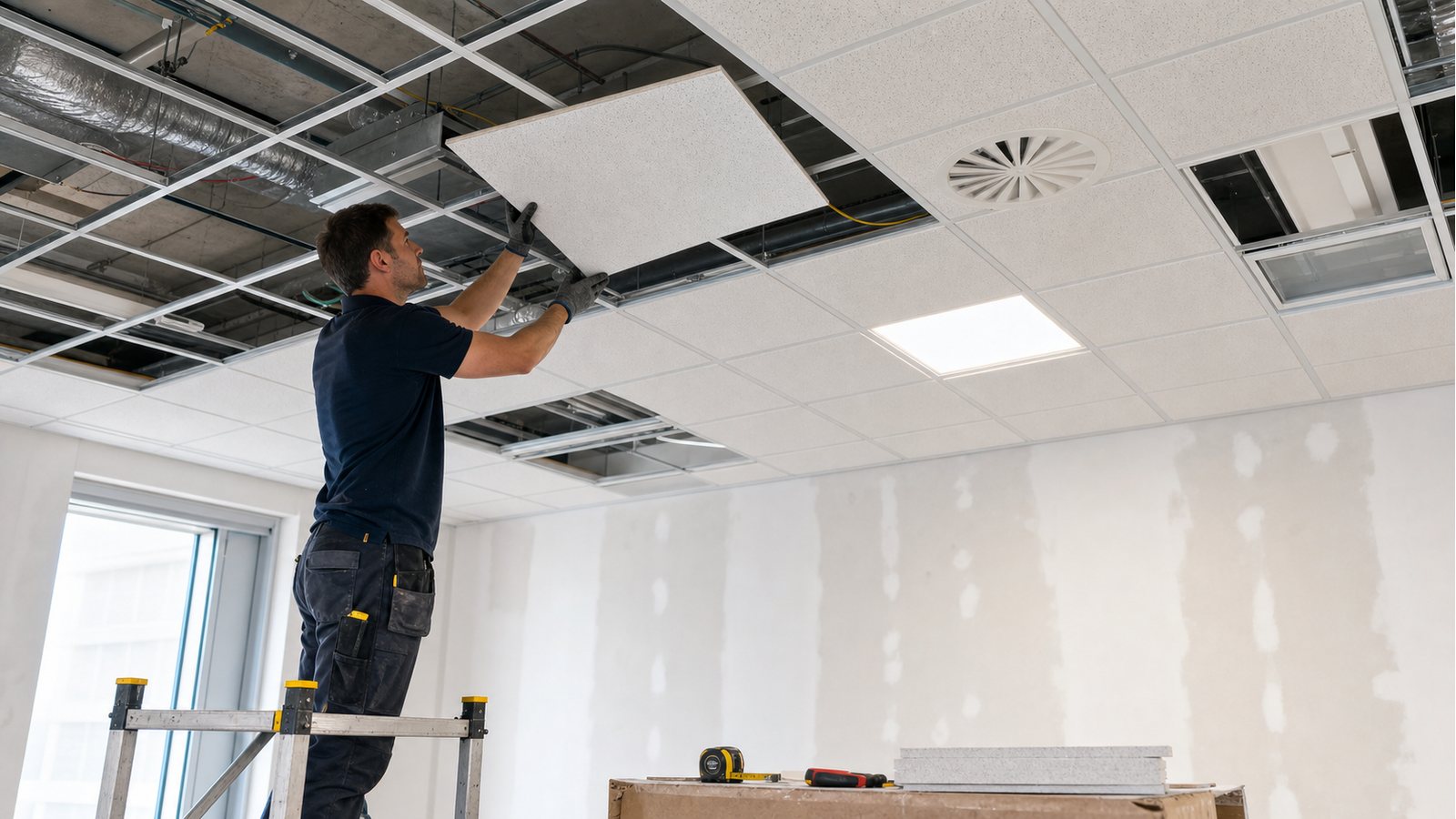
Cutting decisions start before the tile is lifted
Mineral fiber ceiling tile cutting is often treated as the small task at the end of a suspended ceiling job. The grid is level, the cartons are open, and the crew begins trimming border panels or working around diffusers, lights and access points. That is when a ceiling that looked simple on the drawing can start to slow down. A tile cut a few millimeters short may expose a dark line. A rushed service opening can chip the visible face. A repeated room can lose its neat rhythm because every opening is handled as a separate surprise. For overseas distributors, contractors and project buyers, the better discussion starts earlier. Chengyu's live product content describes mineral fiber acoustic ceiling board as the visible modular surface in an exposed T-grid ceiling, used in offices, schools, hospitals, retail, hotel and transport interiors. The same content asks buyers to confirm tile size, thickness, pattern, edge, packing and matching T-grid before ordering. Those details also shape how the installer will cut and fit the board on site.
Read the ceiling as a working plane
A suspended ceiling is not only a field of tiles. It is also a working plane for lighting, air movement, sprinkler work, speakers, sensors and future maintenance access. On a clean installation, those services are located before the ceiling crew starts filling the grid. The installer should know which openings belong in full tiles, which land near border panels, and which should be adjusted with the layout team before cutting begins. Chengyu supplies painted ceiling T-grid systems with main tee, cross tee and wall angle for common 600 x 600 mm, 600 x 1200 mm, 2 x 2 ft and 2 x 4 ft layouts. That module choice matters when services repeat across a corridor or open office. If a diffuser always falls close to a tee, the cut may be awkward and the tile edge may have little support. If the grid and services are coordinated early, more openings can sit cleanly inside the tile field.
Border panels need slower measuring
Border cuts look easy because they are usually straight. In practice, they are where uneven walls, columns and small room-size differences become visible. The wall angle frames the whole ceiling, so a poor border cut catches the eye even when the center field is correct. Crews should measure each border location instead of assuming every wall run is identical, especially in renovation work or in rooms divided after the main ceiling lines were planned. The tile edge also changes the work. Chengyu's mineral fiber board range includes square, tegular and revealed edge options. A square edge border cut is not the same hand movement as a tegular border detail. Armstrong's installation guidance for mineral fiber and fiberglass panels gives a useful field habit: cut panels face up with a sharp utility knife, and make tegular cuts on a flat surface with a controlled blade angle. The point for buyers is plain: edge selection belongs in the installation conversation, not only in the sample review.
Service openings should not become rough holes
Cutting ceiling tiles around diffusers or other services calls for more care than trimming a perimeter strip. The opening has to be marked from the correct side, checked against the actual device frame, and cut with enough control to avoid tearing the face. On busy jobs, installers sometimes rush this step because the service device will cover part of the cut. That shortcut can still leave a weak corner, loose dust on the tile face or a visible gap once the grille or trim is set. The practical method is to keep one clean measuring routine. Confirm the tile orientation before marking. Support the board on a flat surface. Use a sharp blade rather than forcing a dull one through the mineral fiber core. Keep hands and gloves clean so the finished face is not smudged before it reaches the grid. When the opening is repeated, use the first approved tile as a checking reference, but still confirm that the service location has not shifted in the next bay.
Match cut tiles to the room release
Mineral fiber ceiling tile cutting also depends on site staging. If all cartons are opened together and tiles move from room to room, the crew can lose control of module, edge and pattern. Chengyu lists common mineral fiber board modules including 595 x 595, 600 x 600, 603 x 603 and 600 x 1200 mm. Similar cartons can serve different rooms or different grid layouts. Once loose tiles are mixed, the installer spends time sorting instead of fitting. A better release follows the same logic as the ceiling package. Keep tiles, T-grid face width, wall angle and accessories tied to the room family or installation phase. Hold special cuts until the grid, services and border measurements are confirmed. Keep spare full tiles separate from already cut pieces. For distributors breaking bulk after import, clear labels and room-based handling notes can prevent a good shipment from becoming a confusing site pile.
Buyers can specify the cutting context
The RFQ does not need to become a method statement, but it should give the supplier enough context to support the right package. State the tile module, edge type, visible pattern, matching T-grid face width and whether the order includes many service-heavy rooms. If the contractor expects repeated diffuser or access panel zones, note that in the project discussion. If several room types use different tile edges, keep those areas separated in the order language and packing request. Mineral fiber ceiling tile cutting will always be finished by the installer, but the quality of that work is influenced by decisions made earlier: module choice, edge detail, grid layout, service coordination, clean handling and clear labels. When those points are settled before tiles are lifted into place, the crew has a better chance of leaving a ceiling that looks orderly from below and remains practical for the people who will work above it later.