Site Handling
Mineral Fiber Ceiling Board Staging for Phased Floors
How contractors and distributors stage ceiling board cartons, grid bundles and room phases before tile loading begins.
Staging starts after receiving, not at tile loading
Mineral fiber ceiling board staging is the quiet middle step between a clean delivery and a clean ceiling. The cartons have already been counted, the pallets may be intact, and the installation crew is not yet dropping tiles into the grid. This is the point where a contractor can still decide whether the material will move by room, by floor, or by whichever stack happens to be closest to the lift. Chengyu's product content describes mineral fiber acoustic ceiling board as the visible modular surface in an exposed T grid ceiling, used where buyers need a clean replaceable finish, practical sound absorption and access to services above the ceiling. That product role explains why staging matters. The board is not just stock in a warehouse; it is the finished face of a room that still has to open for maintenance.
Keep board cartons tied to the ceiling phase
A phased floor rarely receives every ceiling area at the same pace. One corridor may be ready for tile loading while meeting rooms still wait for lights, diffusers or final cleaning. If all cartons are opened from a central pile, installers start borrowing from future rooms and the buyer loses the simple link between ordered quantity and installed area. The better habit is to stage unopened cartons close to the rooms that can actually use them. Pallets can be grouped by floor, wing or room family, with enough aisle space for checking and movement. This does not require a complicated warehouse system. It requires the receiving team to treat ceiling board as a finish material that deserves a release plan before cartons are cut open.
Module and edge detail should stay visible
The current Chengyu mineral fiber board page asks buyers to confirm common metric modules such as 595 x 595, 600 x 600, 603 x 603 and 600 x 1200 mm according to the grid and local installation practice. It also lists square, tegular and revealed edge options. Those choices are easy to discuss during procurement and surprisingly easy to blur on a busy floor. Good staging keeps module and edge identity visible until the installer needs the carton. If square edge boards for a back-of-house area sit beside tegular edge boards for a front office, the difference should not depend on memory. Carton marks, pallet grouping and release notes should all point to the same room logic. The installer should be checking condition and fit, not guessing the original order conversation.
Grid bundles belong in the same conversation
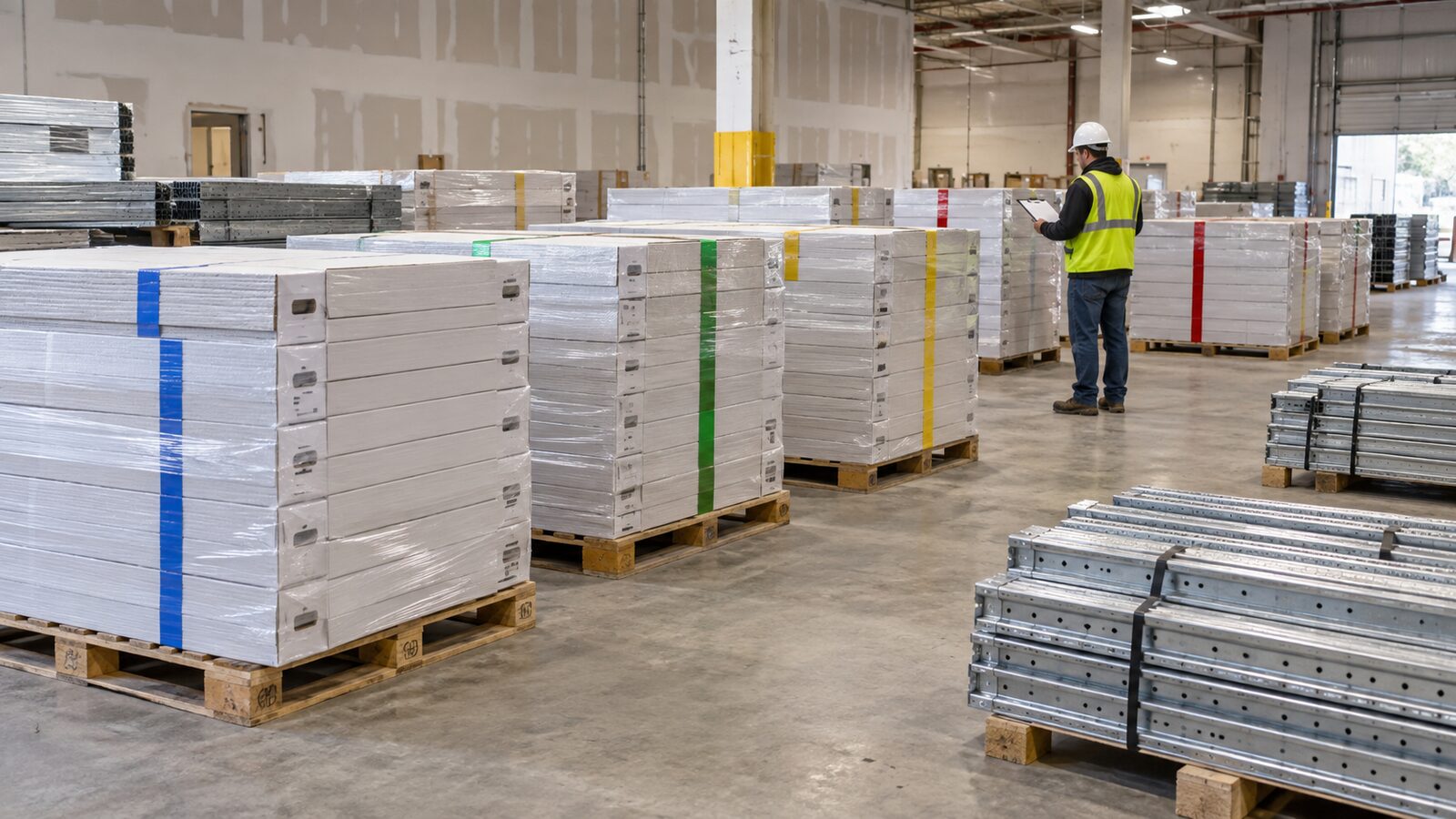
Mineral fiber board is usually judged as a tile product, but it only works cleanly when the exposed grid is ready for it. Chengyu's ceiling system content connects mineral fiber board with painted main tee, cross tee, wall angle and related accessories. On site, that means tile staging should be read against grid readiness, not only against board quantity. The article image shows the point plainly: ceiling board cartons are staged on pallets, and galvanized grid bundles sit nearby. Before tile loading starts, a supervisor can see whether the room has enough board, whether the T grid components for that phase are present, and whether the release area is still workable. Mineral fiber ceiling board staging becomes more useful when it protects the whole ceiling package.
Do not let spare cartons disappear into mixed stock
Commercial ceilings often need a small reserve after the first installation push. Tiles may be lifted for service access, a room may be adjusted during tenant work, or damaged cartons may need to be separated from clean stock. If every spare carton is swallowed by a mixed pallet area, later maintenance starts with searching instead of replacement. A practical staging plan sets aside spare cartons with the same identity as the installed ceiling: size, edge, surface pattern, room phase and matching grid notes where relevant. The reserve does not have to be large to be useful. It has to be readable after the original installation crew has moved on and a different person is asked to find a matching ceiling tile.
Clean staging protects finished faces
Mineral fiber board cartons are different from long metal profiles. Studs, tracks and T grid bundles still need careful handling, but board cartons carry the finished ceiling surface inside. Corners, carton edges and wrap condition affect how confidently a supervisor can release the material for a finished room. For phased work, clean staging usually means keeping cartons off rough traffic paths, avoiding unnecessary double handling, and opening only the stacks needed for the next room. It also means keeping wet or dusty work away from tile loading areas until the ceiling is ready. These are ordinary jobsite decisions, but they decide whether a good product arrives at the grid looking like a finished material.
Put staging language into the RFQ
Distributors and project buyers can help before shipment by writing the staging expectation into the inquiry. A useful RFQ can name the board size, thickness if already selected, surface pattern, edge detail, room type, phased floor release, packing preference, label wording and whether ceiling T grid, wall angle and accessories are ordered with the board. That language gives the supplier and buyer a shared picture of the next handoff. It does not promise site control from a factory desk, and it does not replace the contractor's receiving check. It simply keeps the order tied to how the ceiling will be installed. When mineral fiber ceiling board staging is planned early, cartons, grid bundles and room phases can move through the job without turning every pallet into a small sorting problem.