Maintenance Planning
Mineral Fiber Ceiling Board Replacement Matching on Site
How contractors and distributors match spare mineral fiber ceiling boards to existing T-grid ceilings before replacement work becomes visible.
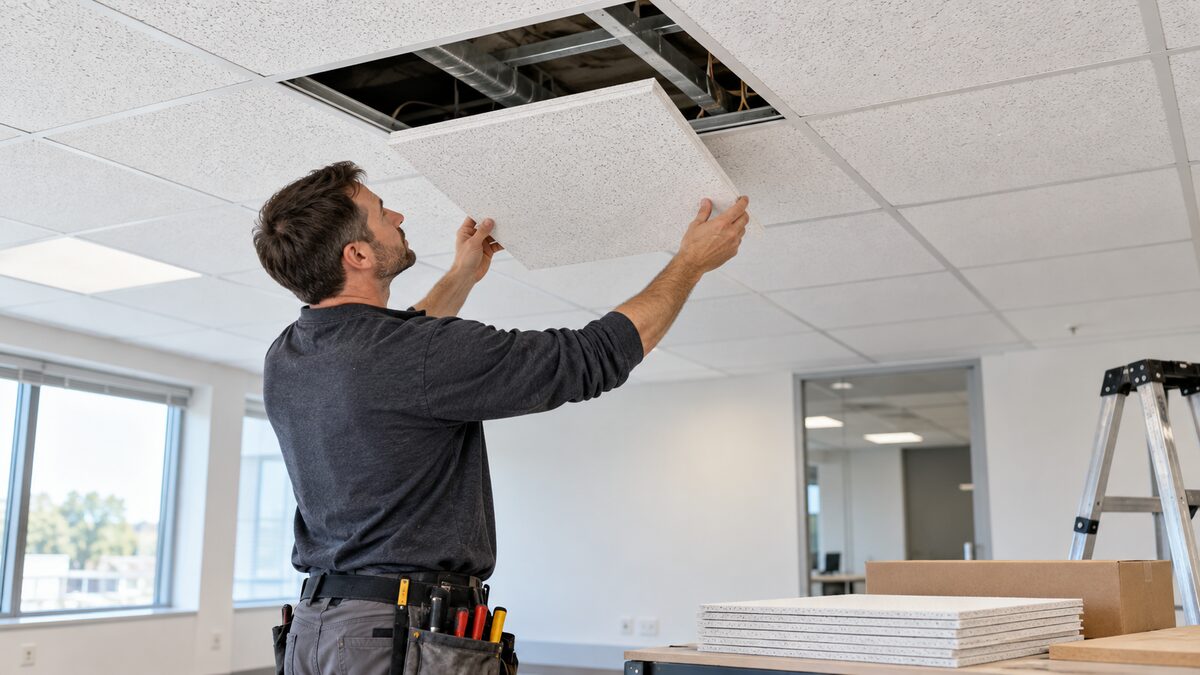
Replacement starts with the installed ceiling
Mineral fiber ceiling board replacement looks simple when the room is quiet and the spare carton is close by. One tile is lifted, another tile is placed back into the T grid, and the ceiling should return to work. On site, the result depends on a series of small matching decisions made before the new board is pushed into the bay. The first reference is always the installed ceiling, not the spare tile by itself. A board that looks white on the floor can read different under office lighting. A square edge can sit differently from a tegular or revealed edge. A nominally similar module can still fight the existing main tee and cross tee pattern if the room was built around another local size. Replacement is where the buyer's order file, the contractor's spare stock and the installer's eye meet in one visible square.
Check module size before judging the face
Before comparing pattern or color, the crew should confirm the module that the T grid actually carries. Chengyu's mineral fiber board content lists common sizes including 595 x 595 mm, 600 x 600 mm, 603 x 603 mm and 600 x 1200 mm. Chengyu's T grid content also describes common 600 x 600 mm, 600 x 1200 mm, 2 x 2 ft and 2 x 4 ft ceiling layouts. Those numbers are not decoration in the catalogue. They decide whether a replacement board drops into the opening cleanly or needs trimming that should not be happening in a finished room. If the tile is tight on two edges, the installer may damage the face while forcing it. If the tile is loose, the gap catches the eye from the doorway. A quick tape check across the open bay is faster than discovering the wrong module after several tiles have been moved.
Match the edge to the exposed T-grid face
The edge detail should be checked while the old tile and the replacement tile can be seen together. Chengyu supplies square, tegular and revealed edge options for mineral fiber acoustic ceiling board. The site should not treat those names as interchangeable, because each edge meets the exposed grid in a different way. A square edge usually reads as a flat plane sitting on the grid. A tegular or revealed edge creates a different shadow line. If only one tile is replaced with the wrong edge, the room may still function, but the patch will be visible every time light crosses the ceiling. The exposed T grid also matters: Chengyu lists 24 mm and 14.5 mm face-width options for painted ceiling T grid. The replacement board should suit the face width already installed, not the face width that happens to be available in the warehouse.
Pattern matching is a practical maintenance task
Mineral fiber boards are not all the same white panel. Chengyu's product data asks buyers to confirm tile size, thickness, pattern, edge, performance documents, packing and the matching T grid before ordering. During replacement work, that same logic moves from purchasing into maintenance. The installer is not only checking whether the board fits. He is checking whether the surface belongs in the ceiling already above him. The most reliable comparison is made under the room's normal light, with the replacement tile held near the opening before it is seated. Heavy speckle, fine texture and smoother patterns can look close in a carton but different in a full ceiling field. If the room contains older tiles, the replacement may still show a tone difference because the installed ceiling has been exposed to use. That should be recorded honestly instead of hidden in a vague note such as "same type".
Keep carton identity with the spare tile
Spare tiles lose value when they lose identity. A building store may hold several mineral fiber board cartons from different rooms, phases or purchase dates. If the labels are removed too early, the maintenance team has to compare loose boards by sight. That can work for a single room, but it becomes unreliable across several floors or repeat fit-outs. For distributors and contractors, the carton note should stay close to the replacement stock: model or pattern reference, module, edge, thickness if used in the order file, and the ceiling area where the tile belongs. Chengyu's website supports private labels and export packing for distributor orders, and that packaging detail is useful after delivery as well as before shipment. A label that survives the store room can prevent the wrong board from being opened months later.
Coordinate replacement with access above the ceiling
Replacement often begins because a tile was damaged during service work above the ceiling. The repair should not ignore that access route. Mineral fiber ceiling board forms a modular suspended ceiling surface where buyers need a clean, replaceable finish and access to services above the ceiling. If a tile has been opened repeatedly, the maintenance plan should ask whether that bay needs clearer spare stock or a different access habit. The T grid should also be read before the new board is installed. Main tees, cross tees and wall angle create the exposed suspension framework. If a cross tee has shifted, if the bay is no longer square, or if the wall angle near a border tile is disturbed, a new board alone will not make the ceiling look settled. The installer should correct the support condition first, then place the replacement tile.
Turn one replacement into a better order note
A single tile replacement can improve the next purchase if the team writes down what actually mattered. The useful note is short: room name, module, edge, surface pattern, installed T-grid face width, carton identity and whether the replacement was for routine access, damage or planned stock rotation. That information helps the buyer order the same ceiling board again without asking the installer to rediscover the ceiling from scratch. For project buyers, the lesson is not to buy every spare tile blindly. It is to keep the replacement decision tied to the ceiling system that is already in the room. Mineral fiber ceiling board replacement works best when the spare board, exposed T grid and order record all tell the same story. Then the repaired ceiling looks intentional, and the maintenance team keeps a usable record for the next room.