Specification Control
Mineral Fiber Ceiling Board Acoustic Data Checks for Buyers
How buyers review named mineral board models, NRC references, edge detail and grid matching before specification.
Acoustic data has to belong to a named board
Mineral fiber ceiling board acoustic data is useful only when everyone knows which board it describes. Overseas buyers often receive a short message asking for an acoustic ceiling tile with a certain NRC reference, a familiar surface pattern and a standard carton plan. That may sound complete, but it still leaves room for mistakes if the model name, thickness, edge detail, size and matching T grid are not tied together before quotation. Chengyu presents mineral fiber acoustic ceiling board as the visible modular surface in an exposed T grid ceiling. The website lists common project modules, square, tegular and revealed edge choices, and model-specific acoustic references. That wording matters. It tells buyers not to copy one data line across every pattern or use a general ceiling-board phrase where a named product should be reviewed.
Do not treat NRC as a generic product label
The current product content separates several catalog examples. Snowflake, Snowball, Snowstar and Snowdot are shown at NRC 0.55 and reflectivity 0.70. Snow Sand is shown at NRC 0.65 and reflectivity 0.90. Xuechuan is shown at NRC 0.60 and reflectivity 0.85. Xuedong is shown at NRC 0.85 and reflectivity 0.85. Those figures should stay attached to the named catalog products and stated test basis. For distributors, that is a practical stock-control issue as much as a technical issue. A warehouse may hold several white mineral fiber board patterns that look similar from a distance. If the sales sheet, carton label and project submittal use only a broad description, staff may treat unlike boards as interchangeable. A cleaner order records the model name beside the acoustic reference so the right sample, carton and document stay together.
Surface pattern affects more than appearance
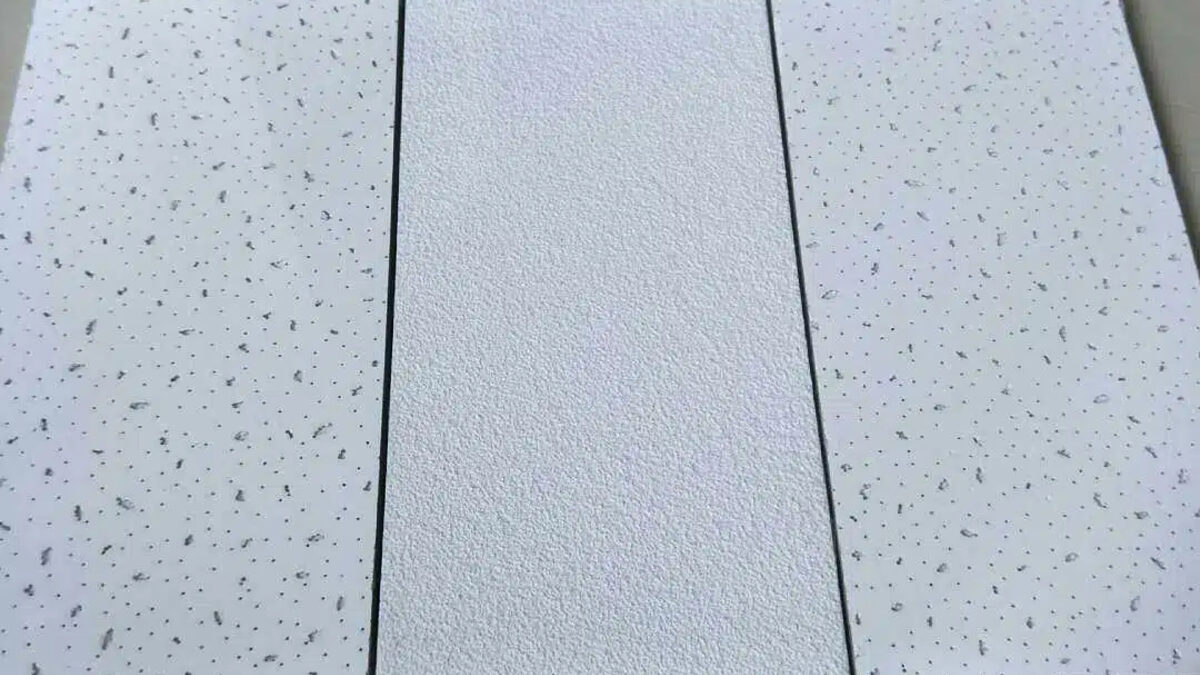
Pattern selection is often discussed visually: fine fissures, small pinholes, sand texture or a cleaner white face. The visual choice is real, especially in offices, schools, hospitals, retail spaces and transport interiors where the ceiling covers a large field. But the pattern also becomes part of the product identity. If a buyer approves one surface and later reorders another with the same loose description, the ceiling may pass a quick count and still disappoint the installer or owner. The article image shows three mineral fiber ceiling board samples side by side. It is a simple scene, but it explains the buying problem well. Similar white panels can carry different surface textures, edge impressions and catalog identities. Before a distributor commits to stock or a contractor submits a ceiling schedule, the sample image, model name and data reference should point to the same board.
Match the edge to the exposed grid
Chengyu lists square edge, tegular edge and revealed edge options for mineral fiber board. The edge choice changes how the tile sits in the ceiling plane and how it reads against the exposed T grid. A square edge can give one kind of clean modular look, while a tegular or revealed edge changes the shadow line. The right choice depends on the project drawing, the grid face width and local installation practice. This is why mineral fiber ceiling board acoustic data should not travel alone. A buyer may choose a board for its acoustic reference, then find that the edge detail does not match the ceiling appearance expected by the project. The RFQ should state the tile size, edge, pattern, selected model and T grid requirement in the same place. That gives the supplier a realistic basis for review and gives the receiving team a clearer identity to check later.
Size decisions shape the whole ceiling package
The website lists common mineral fiber board sizes including 595 x 595 mm, 600 x 600 mm, 603 x 603 mm and 600 x 1200 mm. These dimensions are not small clerical details. They set the module rhythm, influence border planning and decide which main tee and cross tee layout belongs to the room. When painted T grid is supplied with board, the size decision should be reviewed as a ceiling package rather than as a separate board order. A useful inquiry does not need to be long. It should name the room type or stock purpose, the board module, the edge, the desired pattern or model, the acoustic and reflectivity reference being reviewed, and whether matching main tee, cross tee, wall angle or accessories are part of the same order. That information keeps the material conversation grounded in the ceiling that will actually be installed.
Document scope should be checked before submittal
Performance documents are strongest when their scope is plain. If a project asks for acoustic, fire or moisture performance information, buyers should request the report scope before using a value in a project specification. The current website already says catalog values are model-specific and that the selected pattern, edge, thickness, test method and supporting document should be confirmed before specification. That caution protects both sides. The supplier avoids promising one value across unrelated boards. The distributor avoids passing a vague statement to the contractor. The contractor avoids submitting a ceiling material that looks right but lacks the exact support expected for that model. In export work, the cleanest document trail usually starts before the purchase order, not after the shipment is being packed.
What buyers should confirm before ordering
Before ordering mineral fiber acoustic ceiling board, confirm the model name, surface pattern, size, thickness, edge detail, acoustic reference, reflectivity reference, required document scope, matching T grid and packing language. If the material is for distributor stock, keep old and new product descriptions consistent enough that the warehouse can separate cartons without relying on memory. If it is for a project, keep the ceiling schedule and sample approval tied to the same board name. Mineral fiber ceiling board acoustic data should make a buying decision clearer, not more abstract. The number belongs beside a real sample, a real model and a real ceiling layout. When that link is visible from inquiry to quotation, submittal, packing and later reorder, overseas buyers have a better chance of receiving the board they meant to specify rather than a close-looking substitute described in the same broad language.