Product Selection
Mineral Fiber Acoustic Ceiling Board Selection by Room
How buyers match mineral fiber board module, edge detail and exposed T-grid to the way each room will be used.
Selection starts at the room, not the carton
Mineral fiber acoustic ceiling board selection is often discussed too late. The drawing shows a suspended ceiling, the buyer asks for a common size, and the conversation moves quickly to cartons and container space. On site, however, the ceiling is judged room by room. A meeting room, a school corridor, a retail aisle and a hospital support area all ask different questions of the same visible surface. For overseas distributors, contractors and project buyers, the useful starting point is not a single universal tile. It is the way the room will be occupied, cleaned, opened for services and viewed under finished lighting. Chengyu's live product content lists mineral fiber acoustic ceiling board for offices, meeting rooms, schools, public buildings, healthcare facilities, retail, hotel and transport interiors. It also asks buyers to confirm tile module, thickness, pattern, edge, performance documents, packing and the matching T-grid before ordering. That is the right order of discussion.
Quiet rooms need a settled visual field
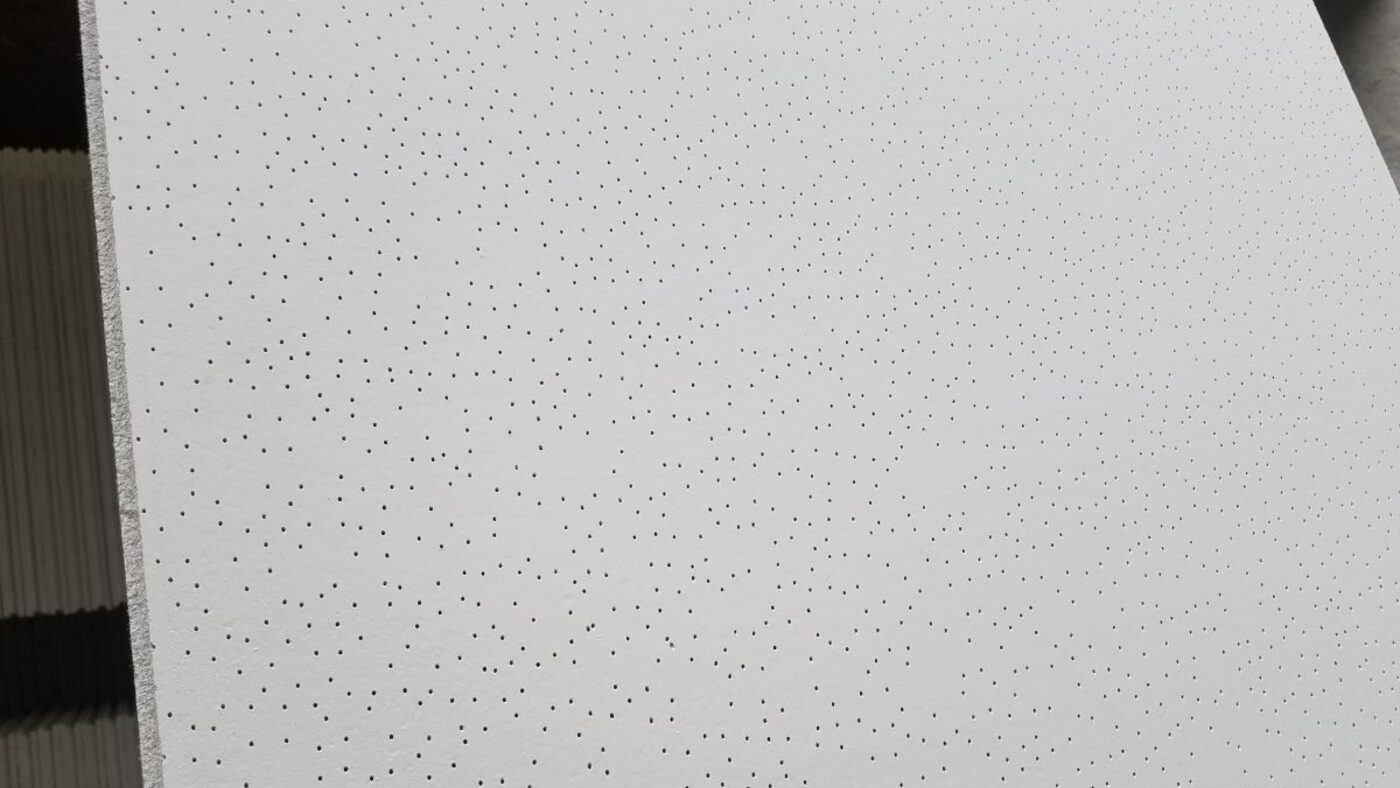
In offices, meeting rooms and classrooms, people spend time looking across the ceiling while lights, air devices and projectors sit in the same plane. The tile pattern should feel steady across repeated modules. A strong speckle, a fine texture or a plainer face may all be acceptable, but the decision should be made with the room's lighting and replacement plan in mind. A sample seen on a desk is useful; a sample imagined across a full ceiling grid is more useful. This is where mineral fiber board differs from a hidden framing component. Its face remains visible after every other trade has left. If a buyer changes pattern between phases, mixes spare cartons casually or orders replacement stock without matching the original surface, the difference can appear immediately. Contractors should record the visible pattern along with the size and edge detail, not treat the face design as a minor description.
Module size should follow the grid and the room rhythm
Chengyu's product data lists common mineral fiber board modules including 595x595, 600x600, 603x603 and 600x1200. The choice is not only a market habit. It affects the ceiling rhythm, border pieces, carton planning and how easily the room can be divided into work areas. A small office may look orderly with repeated square modules, while a long corridor or open support space may be planned around a different layout according to the project drawing. The key point is to settle the tile module together with the exposed grid. Chengyu supplies painted T-grid systems with main tee, cross tee and wall angle for common 600x600 and 600x1200 layouts, as well as 2x2 ft and 2x4 ft markets. If the board size, grid length and room layout are confirmed separately, small mismatches can travel all the way to installation. Good procurement ties the module, tee layout and room schedule into one line of questioning.
Edge detail changes the finished shadow line
The edge is a small detail until the ceiling is lit. Chengyu's mineral fiber board range includes square, tegular and revealed edge options. A square edge gives a different relationship to the T-grid than a tegular or revealed edge. The visible shadow, the way a tile sits in the opening and the impression of the grid face all change with that choice. Buyers should also connect edge detail to grid face width. Chengyu's painted T-grid range includes 24 mm and 15 mm face-width options. Those choices are commonly discussed as appearance preferences, but they should also be reviewed with the selected tile edge and local installation practice. The practical question is not which face width sounds better in a catalog. It is whether the selected board edge and exposed grid create the ceiling line the room needs.
Public rooms need replacement logic from the start
Retail areas, transport interiors, schools and healthcare support spaces often have more movement above and below the ceiling than a private office. Maintenance staff may replace a damaged tile, trades may open ceiling zones for services, and cleaning teams may work close to the finished face. That does not mean every room needs the same board. It means the buyer should decide which rooms need clearer spare-stock identity before the shipment leaves. A practical order separates room families in the paperwork and packing notes where needed. The tile module, edge type, pattern and matching T-grid should remain visible in the handoff. This avoids the familiar problem where a square-edge replacement is sent to a tegular ceiling, or a similar pattern is installed beside an older stock that does not quite match. The cost of confusion usually appears at the site, not during quotation.
Performance documents should be requested plainly
Mineral fiber acoustic ceiling board is bought for a visible ceiling surface, but project teams may also need acoustic, fire or moisture-related documentation. Chengyu's product page asks buyers to state the required acoustic, fire and moisture performance so the appropriate product and available documents can be reviewed. That wording matters. It does not ask the supplier to guess the local rule or invent a number after the order is placed. Distributors can make this part of the normal RFQ. Instead of asking only for a price by size, include the room type, required document set, preferred edge, visible pattern, tile module, T-grid face width, packing expectation and destination market. Clear inputs help the supplier check what can be offered and help the contractor compare material on the same basis.
A clear selection note makes the order easier to repeat
The strongest mineral fiber acoustic ceiling board selection notes are short, but complete. They identify the room family, tile size, edge, surface pattern, matched grid, accessories, packing and any document requirements. They also state whether the board is being ordered alone or together with painted main tee, cross tee, wall angle and related accessories. Chengyu's website supports that combined discussion because mineral fiber board and painted T-grid can be coordinated in one order. For repeat distributors, this discipline protects future sales. When the next phase starts, the buyer can return to a known module and edge instead of rebuilding the specification from memory. When a contractor asks for spare material, the replacement stock can follow the installed ceiling rather than a vague product name. The ceiling then feels simple on site because the complicated decisions were made earlier, in the quotation stage where they belong.