Manufacturing
Light Steel Keel Profile Forming Checks for Cleaner Framing
A practical buyer guide to profile forming checks that help drywall stud and track orders arrive straighter, clearer and easier to stage.
Order language before machine time
On a framing job, the first complaint rarely sounds like a factory problem. The crew says the studs do not line up cleanly, the tracks feel mixed, the punchouts fall where nobody expected them, or the bundles take too long to sort before work can start. By that stage, the real decisions were already made upstream. Light steel keel profile forming shapes what the installer receives on the floor, and that is why distributors, contractors and project buyers should pay more attention to the formed profile itself instead of treating framing as a simple weight-per-order purchase. Chengyu's current product and quotation guidance already points to the key controls. Buyers are asked to confirm profile drawing or sample, width, flange, steel thickness, length, punching, quantity, finish, labels, packing method and destination port. That list is not paperwork for its own sake. It is the commercial version of production discipline. If the order leaves any of those points vague, the roll forming line can still produce metal, but the shipment may no longer match the way the wall or ceiling package will be installed. Good profile forming starts with a precise order language long before the first coil feeds into the machine.
Straight output tells the real story
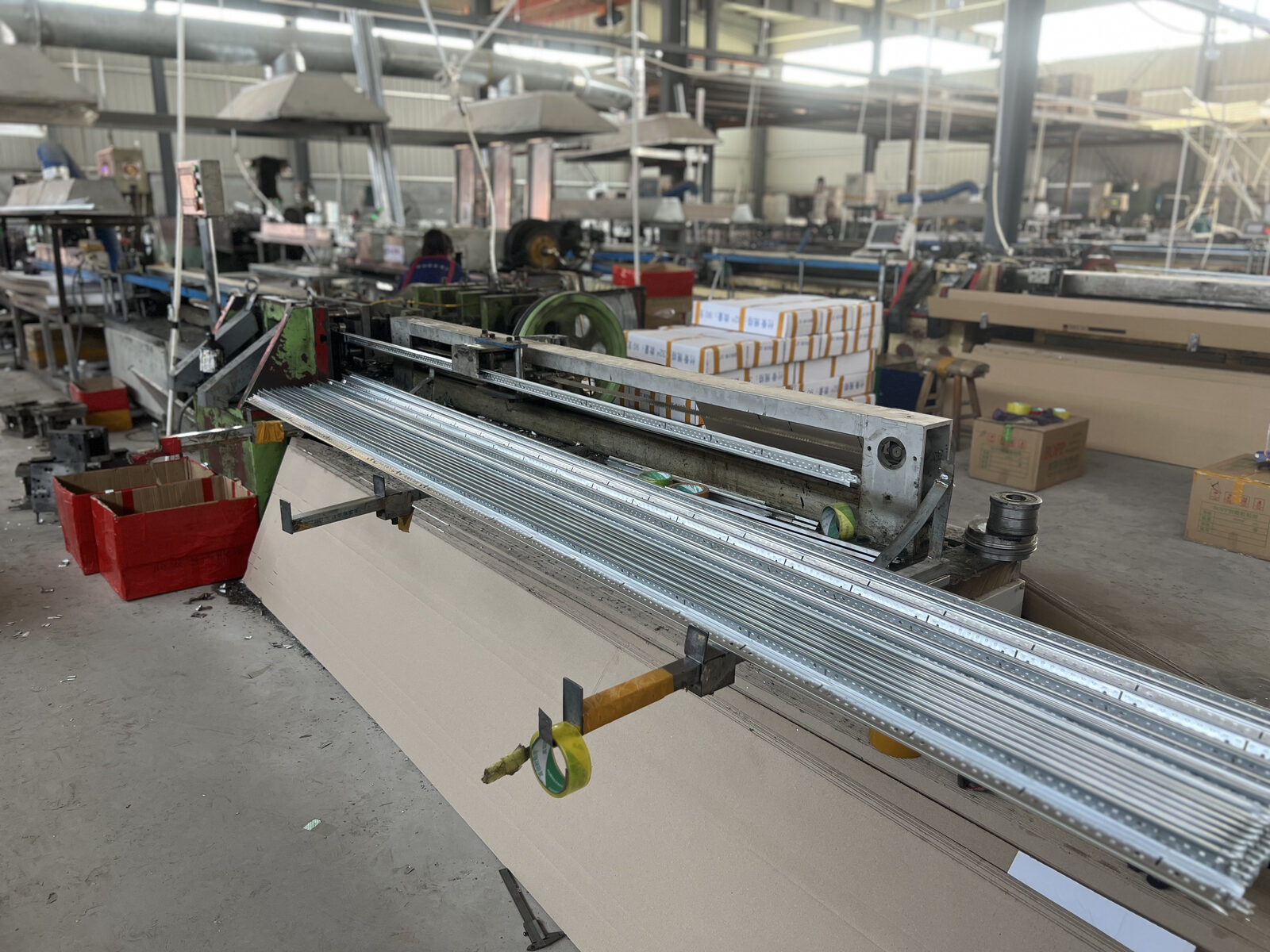
The easiest thing to notice on the production floor is profile shape. Long lengths laid beside the line tell you immediately whether the output looks orderly and repeatable. For drywall partitions, straight studs and tracks reduce hesitation when the crew begins setting walls across corridors, office bays or room sequences that need a clean board line. A framing package does not need marketing language to prove that point. Installers can see it in a minute. If the profile sits cleanly, stacks evenly and presents a consistent edge, the next stage usually moves faster. If every bundle needs extra sorting, turning or checking, the site team pays for that delay even when the metal technically arrived on time.
Punching changes downstream coordination
Punching is the second checkpoint, especially on jobs where services pass through the wall zone. Official framing guidance from ClarkDietrich highlights why this matters: pre-punched studs are used to speed the installation of pipes, conduit and bridging, and the company warns that crews need to keep the same stud end oriented consistently so punchouts align in the wall. The same idea applies to export orders. If buyers specify punching without considering orientation, spacing or the way mixed members will be bundled, the profiles may still be usable, but the field team loses the speed advantage that punching was supposed to create. This is also why stud-and-track matching should be reviewed as one package instead of two commodity lines. Chengyu's framing content already presents vertical studs with matching floor and head tracks as a system decision tied to wall height, board layers and project loading. In practice, buyers who split that discussion too late create avoidable confusion on site. The profile width may be right, but the installation sequence still slows down if track lengths, punched members and opening zones were not planned together. The same problem appears when one order covers several room types but the bundles are prepared as if every partition will be built the same way.
Bundle identity is part of profile quality
Bundle identity deserves more attention than it usually gets. Once profiles are formed, cut and packed, the receiving team has to work from what it can see. Clear labels, separate item groups and consistent bundle logic help the contractor release material by area instead of opening stacks just to figure out what is inside. That matters on export jobs where the person unloading the container is often not the same person who approved the order. It also matters for distributors breaking bulk into smaller project deliveries. A clean bundle is not only a warehouse benefit. It protects the time of every crew that touches the material after arrival. Another useful check is to think about the project sequence before the bundles are closed. A hospital fit-out, a hotel corridor package and a standard office partition order may all use galvanized framing, yet they do not behave the same way when material reaches the floor. Some rooms need more service coordination. Some need repeated lengths that should stay together from unloading to installation. Some need framing released in phases because other trades are still moving overhead. When buyers review light steel keel profile forming with that sequence in mind, they usually ask better questions about cut length, punch pattern, bundle marking and mixed-load packing.
Forming, cutting and packing are one chain
There is a tendency in international purchasing to focus heavily on coil thickness and piece count while leaving profile control to the last stage. That is backwards. The more mixed the order becomes, the more valuable it is to review forming, punching, cutting and packing as one chain. Chengyu's own manufacturing and quality pages already describe that chain clearly: galvanized steel coil selection, roll forming, punching, cutting, profile straightness control, inspection and export packing. The practical takeaway is simple. A framing order is not finished when the machine produces the right general shape. It is finished when the output can be identified, staged and installed without crews having to solve preventable problems in real time. For buyers, the best checkpoint is still a short one. Confirm the profile drawing. Confirm the width, thickness and length. Confirm whether punching is needed and how the formed members will be identified in the bundle. Confirm whether studs, tracks and related channels should be separated by room type or installation phase. Then ask for clear photos of the formed output before shipment if the order is custom or mixed. Those questions do not slow procurement down. They usually prevent the slower outcome, which is a container full of framing that must be decoded on site. That is why light steel keel profile forming deserves a place in the buying conversation well before the first wall line is marked out.