Export Packing
Light Steel Keel Export Packing for Long Profile Orders
Practical packing notes for buyers handling long light steel keel profiles, from matched studs and tracks to cartons, labels, racks and first site release.
Long profiles need packing decisions early
Light steel keel export packing is not only a warehouse task at the end of production. For distributors and contractors, it decides whether long studs, tracks and channels can be counted, unloaded and released without turning the first day on site into a sorting job. A six-meter profile behaves differently from a carton of small accessories. It needs enough support along its length, readable identity on the outside, and a packing plan that matches how the material will be sold or installed. Chengyu's live product content lists light steel keel for suspended ceilings, drywall framing and partition walls, with stud and track catalog lengths from 2000 mm to 6000 mm and OEM options for section, thickness, length, punching, labels and packing after technical review. Those facts put packing in the same conversation as profile selection. If the order includes different widths, punched studs, matching tracks and ceiling channels, the packing note should be written before the first bundle reaches the rack.
Keep matched studs and tracks together
A partition crew does not use studs and tracks as separate buying ideas. The floor and head track set the line, then the studs make the wall stand up to the board work. When export packing separates related profiles too casually, the receiving team may count the shipment correctly but still release the wrong mix to the first work zone. For a mixed drywall framing order, buyers should ask for a packing schedule that keeps matched profile families visible. Stud width, track width, length and punching need plain descriptions on the bundle or carton. Internal item codes can stay on the invoice, but the outer packing should also speak the language used by warehouse staff and installers. A label that can be read while the long carton is still on the rack saves unnecessary opening, re-taping and moving.
Support the length, not just the ends
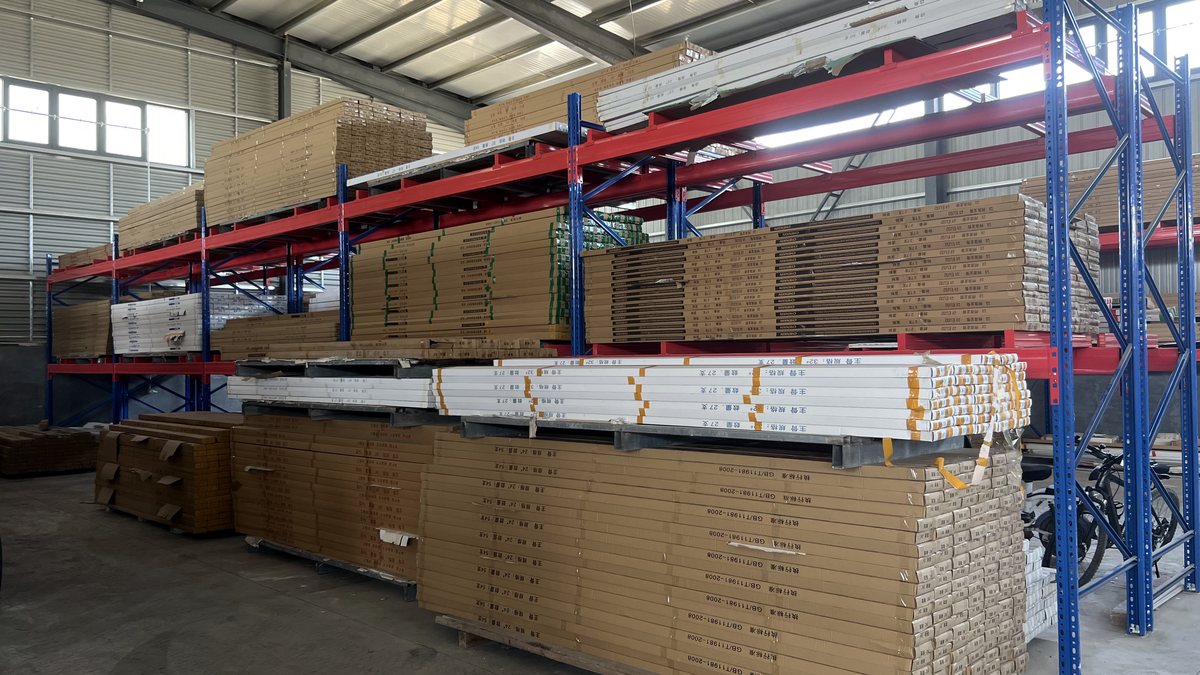
Long light steel profiles can look orderly in a stack and still be awkward to move if support points are poorly chosen. The photograph used for this article shows long boxed profile stock stored horizontally on warehouse racking. That is the type of visual check buyers should make when they discuss export packing: how the profiles sit, where the cartons are supported, and whether the bundle can be lifted without bending pressure concentrated at one short point. The packing method does not need to be complicated. It needs to match the product length and the next handling step. Profiles going into distributor stock may benefit from cartons that can stay closed until resale. Material released directly to a jobsite may need clearer room or phase identification. In both cases, the goal is the same: keep straight products straight enough for practical handling, and keep the outside of the package useful until the crew opens it.
Punching and custom lengths must remain obvious
The site describes roll forming and punching for C channel, U channel, Omega channel and custom profiles, and it also notes OEM production according to samples or technical drawings. Once profiles are boxed, punched and unpunched pieces can be hard to separate quickly if the label only says a broad product name. Custom lengths create the same problem. A few cartons may look identical while serving different wall heights, service zones or room groups. Light steel keel export packing should therefore carry enough information for the first receiving check. Buyers do not need to print a full technical drawing on every carton. They do need profile name, length, quantity, punching status where relevant, and the order reference that ties back to the packing list. When a distributor breaks a container into smaller local deliveries, that information is what keeps the custom work attached to the correct customer.
Separate ceiling channels from partition profiles
Light steel keel is used across more than one interior system. Chengyu's product page names suspended ceiling, drywall framing and partition wall applications, while the accessories content also refers to carrying channel, wall angle, hangers, trims, bundle, carton, pallet and label customization. A mixed order may therefore include ceiling support channels and partition studs in the same shipment. Packing should make that difference plain. Ceiling channels may travel to a ceiling crew while partition studs and tracks go to a wall crew. If both are long galvanized profiles, visual similarity can work against the site team. A simple packing split by application, followed by profile name and length, is often more useful than a purely size-based stack. It helps the distributor load the next truck in the same logic the contractor will use when material reaches the building.
Plan for the first unload, not only the container
Good packing is sometimes judged only by whether the container closes neatly. That is too late in the chain. The first unload is where the buyer discovers whether the order can be checked without stripping every carton. Long profile cartons should be positioned and marked so the receiving team can compare the packing list, count visible groups and separate urgent material without digging through the whole shipment. This is especially important for overseas distributors who hold stock for repeat buyers. A carton that leaves the factory with clear identity can pass through container unloading, warehouse racking and local delivery with less guessing. If the outer label is damaged or too vague, the distributor absorbs the extra labor. For repeat framing profile orders, that labor becomes part of the real cost even when the product itself is correct.
Put packing language into the purchase discussion
The most useful packing instructions are short, specific and agreed before production release. State the profile families, lengths, punching notes, application split, carton or bundle preference, label language and any distributor stock codes that must appear outside the package. If private label or customized packing is needed, it should be reviewed with the same care as section size and thickness. Light steel keel export packing will not fix a poorly planned order, but it can protect a well-planned one. It keeps the decisions made during quotation visible through the warehouse and into the first site release. For contractors, that means fewer interruptions before framing starts. For distributors, it means stock that can be counted, picked and sold without opening every long carton on the floor.