Site Logistics
Drywall Stud Unloading Sequence for Multi-Floor Fit-Outs
A practical unloading sequence that keeps drywall studs, tracks and floor releases legible from the delivery vehicle to the fit-out work area.
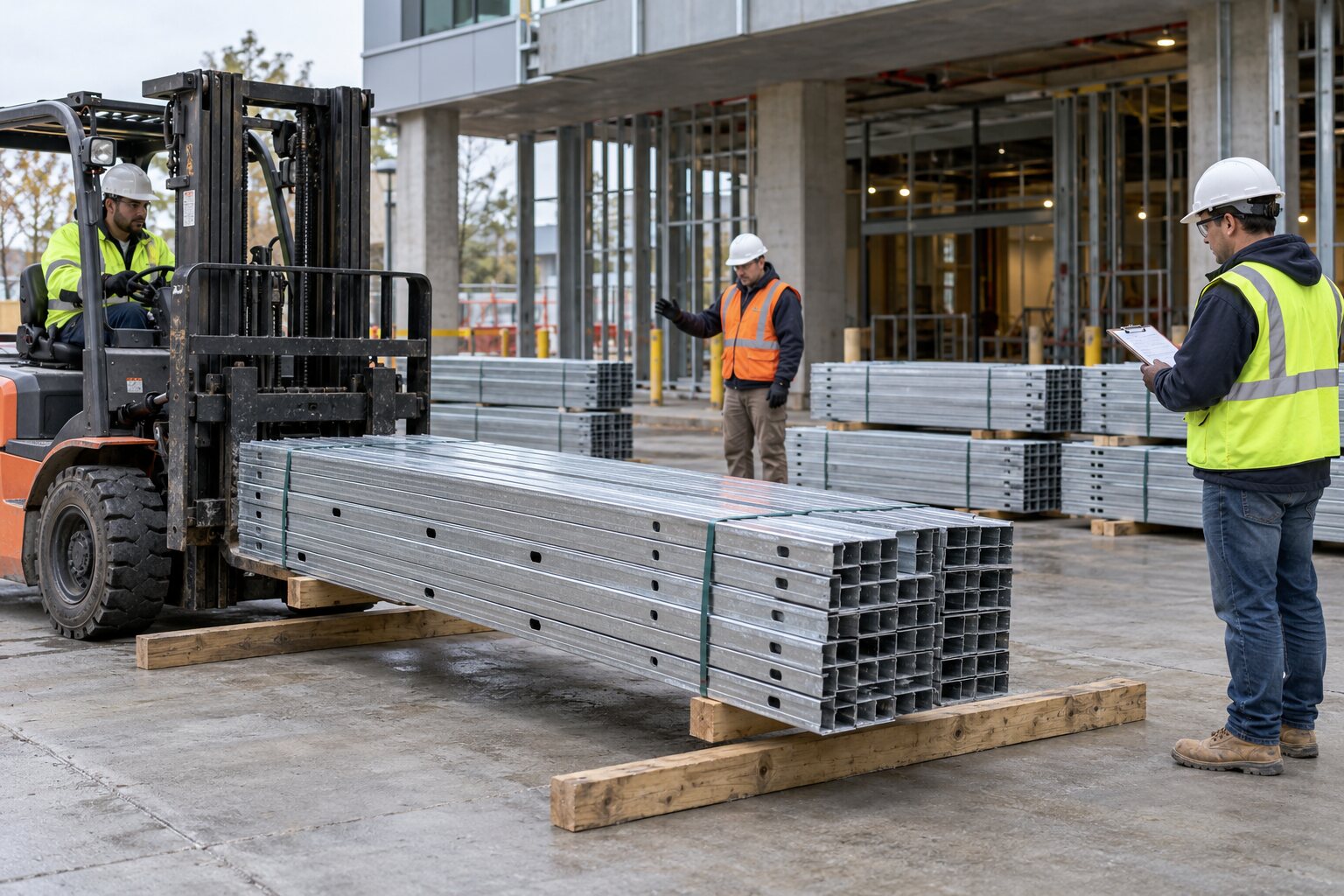
Unloading is the first floor-release decision
A delivery of long drywall profiles can reach a multi-floor project looking neatly bundled and still become difficult within minutes. The vehicle is waiting, the receiving area is limited, and several trades may be using the same entrance. A drywall stud unloading sequence gives the crew a simple order of work before the first bundle leaves the truck: identify it, place it in a defined lane, and keep its destination visible. This is not the same as a receiving count. Receiving confirms what arrived. Unloading decides whether what arrived can move into the project without losing the link between a bundle, its companion track and the floor or wall zone that needs it. That distinction matters most when similar galvanized profiles are planned for more than one level.
Prepare the receiving lane before the vehicle arrives
Choose the set-down area before the delivery vehicle is called forward. Long bundles need clear support points, dry ground where practical, and enough space for the handling equipment to approach without pushing people or other materials into the same path. Timber bearers or another suitable separated support keep the bundle from sitting directly on the ground and make the next lift easier to judge. Mark separate lanes for the immediate work-front release, later floor releases and any bundle that needs an order query resolved. The labels can be plain: floor, zone, profile description and release status. Their value is that the forklift operator, receiver and site supervisor are reading the same instruction. Do not rely on a verbal distinction after several similar stacks are on the ground.
Read bundle identity before moving the profiles upstairs
A stack of metal studs may look close enough to another stack to invite a quick substitution. Before a bundle moves beyond the receiving lane, compare its label and visible profile description with the current release list. Keep studs, tracks and other specified framing profiles distinguishable, especially if their sections, lengths or punching details are different. Chengyu's light steel keel information describes studs, tracks and related ceiling or wall profiles as separate components; the site release should keep that separation readable. When the order includes punched studs, make their status explicit on the release note. A bundle should not be selected merely because it has the correct length. If the site team needs profiles for a particular service route, opening zone or wall type, link that requirement to the intended floor package before the internal movement starts.
Lift by release group rather than by empty space
On a busy project, the fastest-looking place to set a bundle is often the first empty patch of slab. It may also be the place that blocks a doorway, hides a label or mixes tomorrow's material with today's. Move each identified bundle to the staging point assigned to its release group, not to the nearest available corner. If a floor cannot accept its material yet, keep the bundle in the receiving lane with its status unchanged. For internal lifts, confirm the project team's handling plan and the route available on that day. Long profiles turn through corridors, lift lobbies and door openings differently from cartons. A practical site note records where the bundle is going, who receives it and whether it remains unopened for a later crew. It does not replace the project's lifting procedure; it prevents the material schedule from becoming guesswork while that procedure is being followed.
Keep tracks with their intended stud release
Studs and tracks often travel separately because the bundles have different shapes and quantities. They should still remain connected in the release record. When a floor receives only studs, state whether the matching tracks have already arrived, are coming in the next movement, or are held for a defined reason. The partition crew should not have to search another level simply to discover whether a wall line can start. This is also the right moment to preserve visible labels. Take a straightforward receiving photograph if project practice permits, then retain the delivery note with the floor-release record. A picture is useful only when it shows the bundle in its assigned location and the information can still be related to the order. An isolated close-up of galvanized steel provides little help once the profiles have been redistributed.
Close the handoff with one short status check
Before the delivery vehicle leaves or the next bundle is moved, the receiver can make a short handoff check: which release groups are on site, which are safely staged, which profiles remain in the receiving lane, and what must not be moved yet. Check for visible handling damage or displaced straps without treating the unloading area as a product-testing station. If a bundle needs review, separate it from the released material and record why. For overseas distributors and project buyers, a drywall stud unloading sequence is useful because it turns a delivery into a traceable first step of installation. The final order record can name the profile, section, thickness basis where specified, length, punching requirement, labels, packing and destination. At site, the immediate objective is more modest: each long bundle lands in the right place, remains identifiable, and reaches the right floor when that floor is ready.