Framing Installation
Drywall Stud and Track Installation Before the First Board
A practical guide to staging studs, tracks and opening zones so drywall framing reaches the board crew in a cleaner sequence.
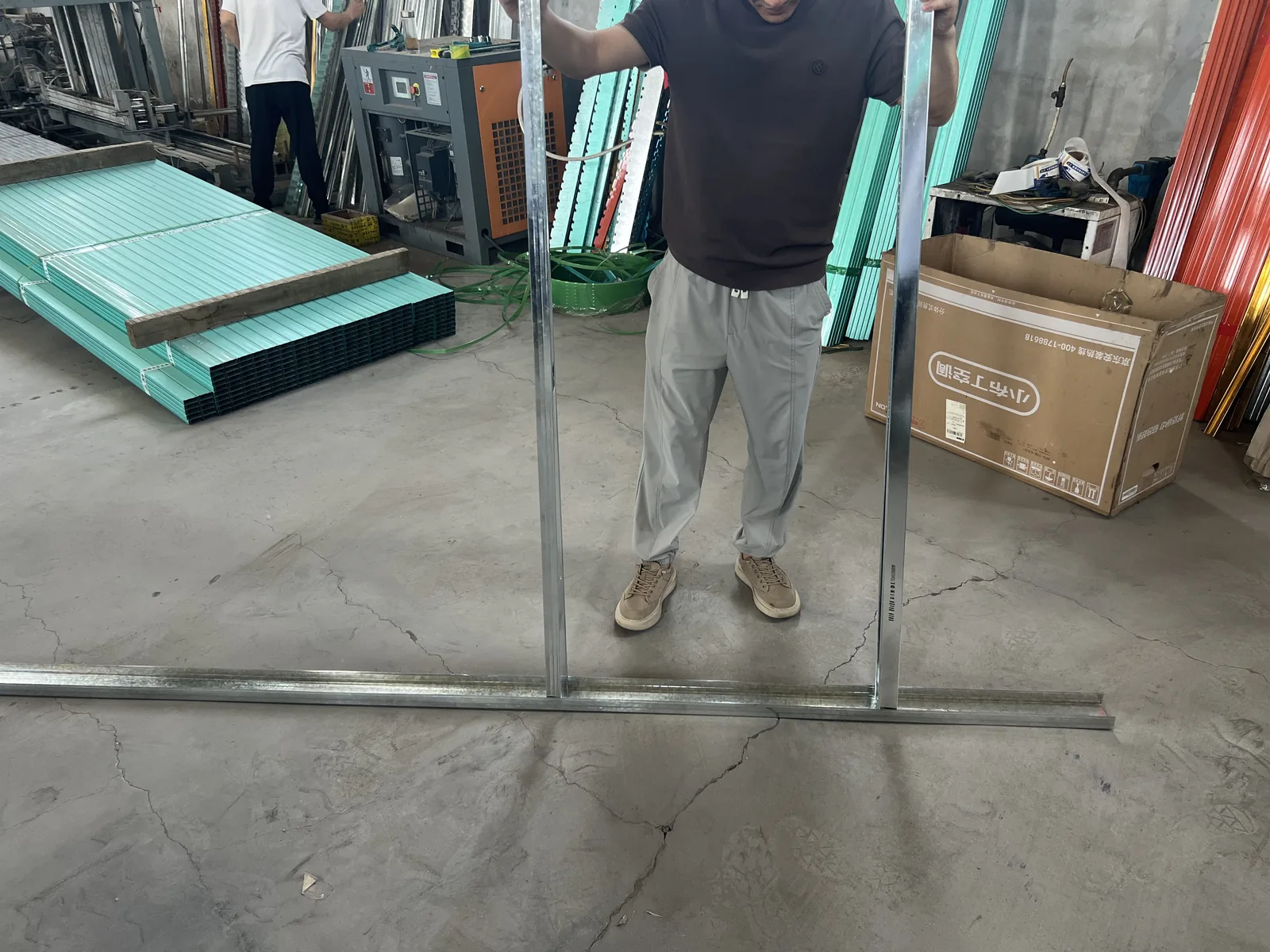
The wall only looks simple on the drawing
A partition run can look straightforward until the first board is about to go up. That is usually the moment when small decisions start turning into visible delays. One bundle has been opened too early, the head track for the next room is somewhere else, the opening width was understood one way in purchasing and another way on site, and the crew is suddenly measuring again instead of fixing board. For distributors, contractors and project buyers, drywall stud and track installation is not only an installer issue. It starts with how the framing package is specified, grouped and released before work reaches the wall line. Chengyu's current product content already frames the system in practical terms: vertical metal studs are matched with floor and head tracks according to wall height, board layers and project loading, while buyers can confirm width, flange, steel thickness, length, punching, labels and packing before production. That matters because installation quality is shaped long before the screw gun appears. If the order language is clear but the release sequence is not, the site team still loses time. If the quantities are right but the opening zones were treated like ordinary wall runs, the framing slows down at exactly the point where several trades need the same space.
Start with the track line, not the leftover bundle
On a clean job, the crew can identify the floor and head track package quickly and set the basic line without opening half the shipment to find matching members. That sounds obvious, but mixed framing orders often arrive with several room types, several lengths and more than one release priority under the same purchase order. When the installation team has to sort through main wall members, shorter infill pieces and opening components on the floor, the first lost hour is rarely recovered later in the shift. This is why track planning deserves attention before the stud bundle is cut open. The practical questions are simple. Which wall lines repeat from room to room? Which areas need shorter release cycles because services are still being coordinated overhead? Which openings need their own grouped pieces instead of being assembled from whatever is left after the straight runs are built? A track package that matches the room sequence helps the crew hold line, level and pace. A mixed package pushes those decisions into the work zone, where every correction costs more.
Openings change the pace of the whole run
The shared-drive framing mock-up makes the point clearly: one framed opening changes the rhythm of the entire wall. A straight partition can move fast with repeated stud spacing, but the first door, access opening or edge condition forces the crew to stop treating the wall as a continuous line. Chengyu's own framing guidance already notes that openings and service zones may need additional framing according to the project drawing. Buyers do not need to dictate every field cut, but they do need to make sure opening-related members are not treated as an afterthought in the supply plan. Board crews notice poor opening preparation immediately. If the jambs are not straight, if the horizontal members were not staged with the opening package, or if the crew has to cut down full lengths just to finish one door area, the wall stops being predictable. That is why many experienced contractors separate ordinary run material from opening material before installation starts. The goal is not extra complexity. The goal is to keep the straight runs moving while the opening zones are framed with the right members already at hand.
Keep service zones in the same conversation
Stud-and-track work also becomes slower when service coordination is left to a later conversation. Chengyu's RFQ and product guidance already allow buyers to specify punching, dimensions and related details before production. On site, that means punched members, plain members and framing around service-heavy zones should not be bundled together without a clear release logic. Electricians, plumbing trades and drywall crews do not approach the same wall in the same sequence, so the framing package should help them, not force them to decode it. A corridor wall, an office partition and a utility enclosure may all use galvanized framing, yet they behave differently once installation begins. Some walls need clean uninterrupted board lines. Some need easier passage for services. Some need tighter attention around access points and end conditions. If those room types are treated as one generic tonnage order, the installation team will separate them later by hand. It is cheaper to do that separation in planning, labels and bundle sequence than in the middle of a crowded work area.
Release material by work zone
The most useful staging plan is usually geographic, not abstract. Release one area, one room family or one wall sequence at a time. Keep track members, matching studs and obvious opening pieces together. Use the label and packing stage to distinguish what belongs to the repeated straight runs and what belongs to the interrupted zones. Chengyu already presents bundle labels and export packing as part of the buying discussion, and this is exactly where those details start earning their value. A clear label is not only for the warehouse. It protects installation pace on the floor. This also helps overseas distributors who break bulk after arrival. The person unloading the shipment may not be the same person who priced it, and the person carrying material to the work face may not be the same person who checked the packing list. When the installation sequence is reflected in labels and grouped members, fewer decisions are pushed downstream. When the package is organized only by total quantity, every later handoff becomes slower.
Before the first board goes up
A short review usually prevents most of the avoidable trouble. Confirm the stud and track widths against the wall types. Confirm whether punched members belong to all areas or only selected walls. Separate opening-related members from ordinary run material. Check which room groups should be released first and which can wait for later coordination. Ask whether labels and bundle grouping will make that sequence obvious when the material is unloaded. None of those questions are theoretical. They are all visible on the first day of framing. That is why drywall stud and track installation should be reviewed as a release sequence, not only as a quantity exercise. When the track line, opening zones, service areas and bundle logic are settled before the first board is lifted, the crew spends more time building and less time sorting. The wall line stays cleaner, the handoff to the board team is calmer, and the framing package behaves like a system instead of a pile of similar-looking members.