Drywall Framing Coordination
Drywall Partition Junction Framing Checks Before Board Fixing
Practical checks for corner and T-junction framing before board fixing closes drywall partition intersections.
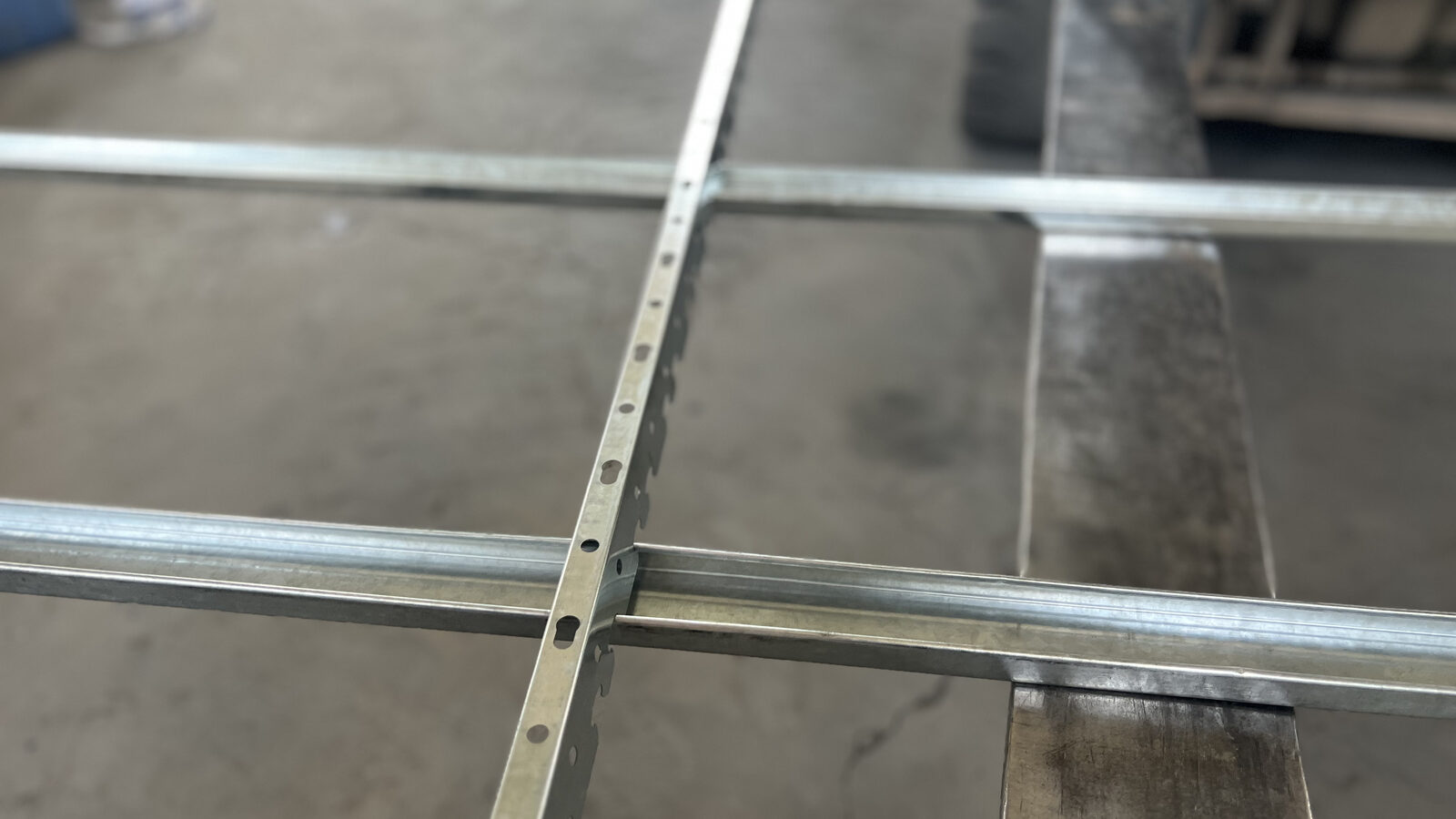
Junctions decide how straight walls read
Drywall partition junction framing is where a clean wall run either holds its line or starts to look improvised. A straight partition can be set out carefully, but the room still depends on what happens at corners, T-junctions and short return walls. These places collect the last stud in one run, the first stud in another, board edges, service routes and sometimes a change in room sequence. If the junction is treated as leftover framing, the board crew inherits the problem. Chengyu describes light steel keel as the concealed galvanized framework behind gypsum board partition walls, wall linings and suspended ceilings. On a real fit-out floor, that concealed frame must be readable before it disappears. The installer should be able to see which track controls the line, which studs belong to each wall face, and where punched holes or extra pieces must stay clear of the board fixing path. A junction is small, but it can decide the pace of the whole partition zone.
Start from the track run, not the loose stud
The first check is the track line. A typical partition uses vertical metal studs with matching floor and head tracks, and the site drawing should decide how those tracks meet. At a corner, one track may run through while the return track stops cleanly against it. At a T-junction, the crossing wall needs a clear centerline and enough space for board fixing on both sides. The crew should not solve that by pushing in a loose stud wherever there is a gap. Before studs are loaded into the tracks, walk the junction from both rooms. Look at door swings, ceiling lines, service zones and the side that will receive board first. A few minutes here prevents a common delay: one crew frames a straight wall, another crew starts the return wall, and the intersection becomes a stack of similar galvanized pieces with no agreed role. If the head track and floor track do not tell the same story, stop and correct the line before cutting or fastening more profiles.
Make the last stud useful for two board edges
The last stud in a wall run is not only an end marker. At a junction, it often becomes the fixing point that allows two board edges to close neatly. If it is placed only for the first wall face, the return wall may be left with a weak edge, a narrow strip of board, or a late request for extra backing. None of those issues shows up in a carton count, but installers see them immediately when the first sheet is lifted. Chengyu product information notes that drywall metal studs and tracks are used for office, hotel, hospital and apartment partitions, and that openings and service zones may need additional framing according to the project drawing. Junctions deserve the same treatment. Do not assume every intersection can use the same stud arrangement. Check whether the board edge, return wall, corner bead, service chase or lining condition needs another profile, and keep that decision visible until the first board is fixed.
Keep punched holes away from crowded corners
Punched studs help service routing when the holes line up with the wall plan, but a junction is often the wrong place to improvise. Electrical conduits, low-voltage cables or small pipes may want to turn near the same corner where board edges and return studs are already fighting for space. If a punched hole lands in a crowded corner, the installer may be tempted to enlarge it by hand or cut another opening. That creates a local solution and a future inspection question. The better approach is to separate service logic from corner logic before installation. Use the drawing to decide which studs need punching, where the route should pass through the field of the wall, and where solid or unpunched pieces are easier to control. Buyers ordering OEM profiles can specify punching, length, section and packing after technical review. That flexibility is useful only when the inquiry explains the wall zones, not just the total quantity of studs.
Labels should follow wall zones
Junction errors also come from mixed material release. Many galvanized profiles look alike when they are stacked in a corridor, especially when similar widths or lengths are supplied for several room types. Chengyu can support profile dimensions, steel thickness, length, punching, surface finish, bundle labels and export packing. For a contractor, those labels should connect to work zones: corridor partitions, office returns, service walls, high-traffic corner areas or repeat apartment layouts. A distributor can help by asking for labels that workers can use without decoding private shorthand. The carton or bundle does not need a long explanation. It needs the profile role, length or width reference, punching note if relevant, and the zone where the material should be released. When junction framing is packed with the same logic as the installation sequence, fewer pieces are dragged from room to room and fewer similar studs are checked twice.
Put junction notes into the RFQ
Drywall partition junction framing should be part of the purchase conversation, not a site complaint after delivery. A useful RFQ includes the profile drawing or sample, dimensions, steel thickness method, length, punching requirement, finish, quantity, label language, packing method and destination port. For junction-heavy work, add a short note about wall intersections: typical corners, T-junctions, return walls, service routes and whether profiles should be grouped by floor, room or wall type. That information does not ask the factory to design the partition. It gives the supplier and buyer a clearer language for the order. The contractor still follows the project drawing, but the profiles arrive with fewer unanswered questions. At the junction, that means the track run is clear, the last stud has a job, service holes do not collide with the corner, and the board crew can close the wall without stopping to rebuild the frame.