Drywall Framing Coordination
Drywall Metal Stud Plumb Checks Before Board Fixing
How contractors keep metal studs vertical, readable and board-ready before gypsum board hides the frame.
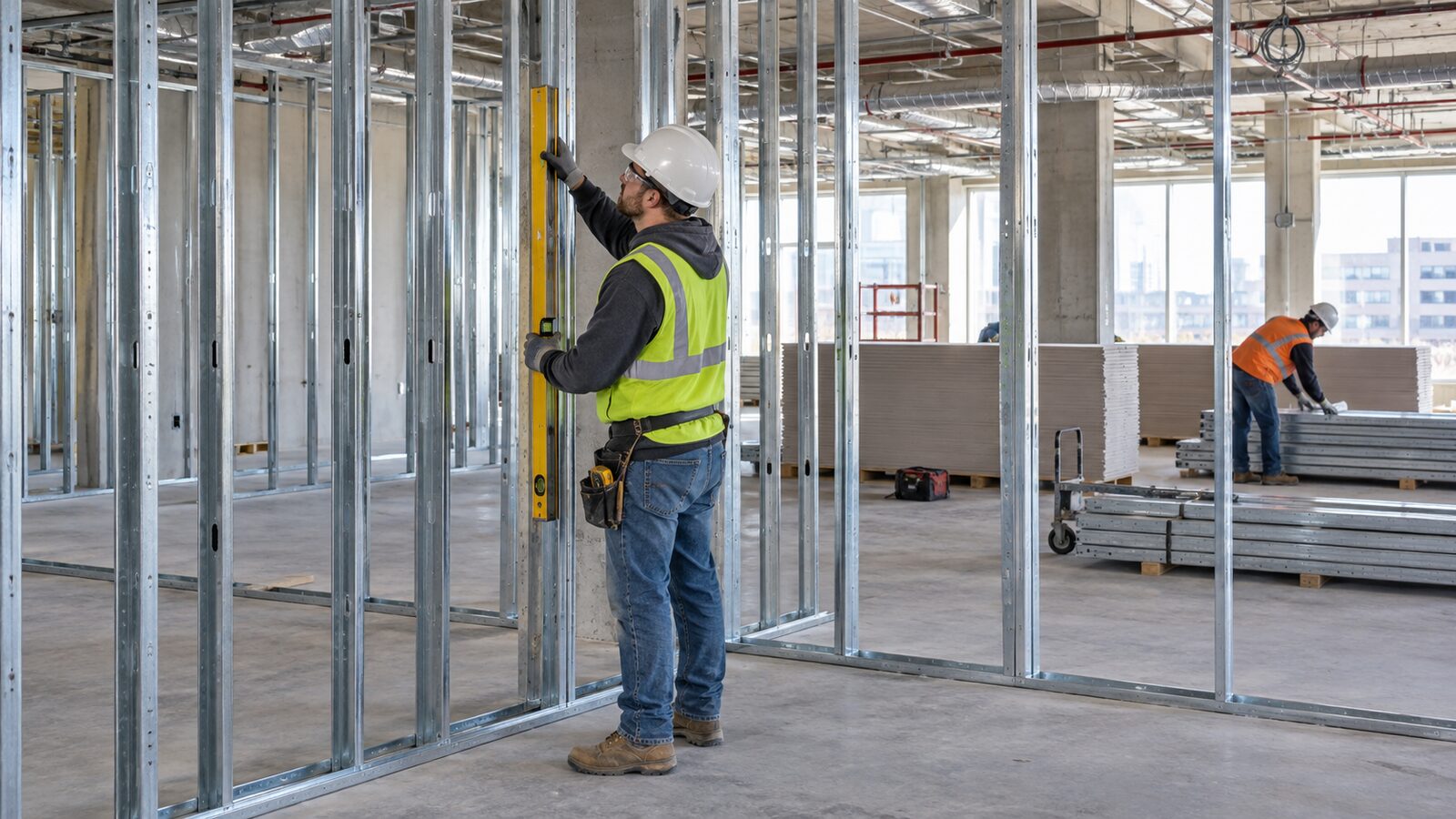
Plumb checks protect the wall before it disappears
Drywall metal stud plumb checks happen at the last useful moment before a partition frame begins to disappear behind gypsum board. The tracks may be fixed, studs may be standing at regular centers, and the room may look ready from a distance. Up close, small errors still have time to move. A twisted stud, a head track that drifts from the floor line, or an opening jamb pulled out of plane can turn into board gaps, uneven screw lines and slow finishing work. For overseas distributors, contractors and project buyers, this is not only an installer habit. Chengyu's light steel keel range is used for drywall framing, partition walls and ceiling suspension, with galvanized stud and track options selected by width, flange height, gauge and length. The factory can supply the profile package, punching, labels and packing details after technical review. Site teams still decide whether those profiles are released into straight, board-ready walls.
Start with the track pair, not the loose stud
A vertical stud can only be as reliable as the track pair that holds it. Before checking every individual member, installers should compare the floor track and head track as one reference. If the bottom line follows the drawing but the top line has shifted around services, soffits or uneven structure, the studs will look vertical only in small groups. The board crew will discover the drift when sheets refuse to sit cleanly across the run. The practical check is simple. Stand back along the partition line, confirm that the floor track is fixed to the approved layout, then read the head track above it. Where the head track steps around overhead conditions, the decision should be visible and recorded. A worker holding a level on one stud cannot correct a wall if the two tracks are already telling different stories.
Read stud rotation before fixing becomes permanent
Metal studs can stand in the right location and still be wrong for board fixing. Rotation is the quiet problem. A stud face turned slightly out of line changes how the board touches the frame, how screws bite, and how flat the finished surface reads after jointing. It is especially easy to miss on long commercial runs where the crew is moving quickly and every vertical piece looks similar from the aisle. Before board release, installers should sight along the open side of the studs and look for faces that do not share the same plane. A long straightedge, level, laser line or taught string can help, but the important habit is to check the run as a surface, not as separate sticks. Chengyu's drywall metal studs and tracks are galvanized steel profiles; once they are fixed in the wall, alignment depends on careful handling, consistent orientation and clear site release.
Openings need slower plumb checks
Doorways, borrowed lights, service cupboards and access panels deserve a slower check than a plain wall bay. These openings interrupt the rhythm of the partition. Jamb studs, short track pieces and head details may all be handled by different workers during the same shift. If one side of an opening leans or twists, the board may still go on, but the frame, reveal or trim that follows will show the error. A useful opening check compares both sides before the first board covers the area. Are the jamb studs standing in the same plane? Does the head piece land squarely? Are the studs around the opening cut and fixed for the actual frame or only for a rough hole? Where the project uses room-by-room release, openings should have their own note so replacement bundles, offcuts and short pieces do not get mixed into the general wall stock.
Service holes should not pull the wall out of line
Punched studs help service routes stay organized, but they can also distract from plumb. Electricians, data installers and other trades naturally read the holes first. The framing crew has to read both the holes and the wall line. If punched openings line up while the stud face is twisted, the service path may look convenient and the board plane may still be poor. This is where drywall metal stud plumb checks connect with service coordination. The team should confirm that punched holes face the intended route, that studs are not reversed without reason, and that any field adjustment does not sacrifice the board face. If services need a changed route, the change should be agreed before board fixing, not forced by bending, notching or rotating studs after the wall has already been released.
Labels and bundle logic still matter on the floor
Good packing does not stop at the container door. Chengyu's product information notes options for custom section, thickness, length, punching, labels and packing after technical review. Those details are useful only if site teams keep them connected to the wall zones they were meant to serve. When similar galvanized profiles are opened in several rooms at once, the wrong length or punching group can reach the right wall and create a quiet alignment problem. Contractors should keep studs, tracks and short opening pieces grouped by room, floor or work zone until the frame is checked. If a bundle is split, the label should move with the material or be copied into the site note. For distributors, this is a good point to discuss with repeat buyers: ask whether orders need floor-release labels, opening-zone groups, or separate marks for punched and unpunched studs.
Release the wall when the board crew can read it
A board-ready frame is not perfect because every screw is already decided. It is ready because the next crew can understand the wall without guessing. The track line is trusted, studs stand plumb, openings are square enough for the intended frame, service holes face the route, and mixed profiles are no longer lying against the wall without identity. That is the condition worth releasing. For buyers, the order file should support that condition. Include the partition application, preferred stud and track sizes, length groups, punching needs, labels and packing expectations. For installers, keep the final check short enough to use: track pair, stud plane, opening zones, service route, labels and board release. Drywall metal stud plumb checks are a modest step, but they are one of the last chances to make a light steel keel partition easier to close, finish and repeat.